
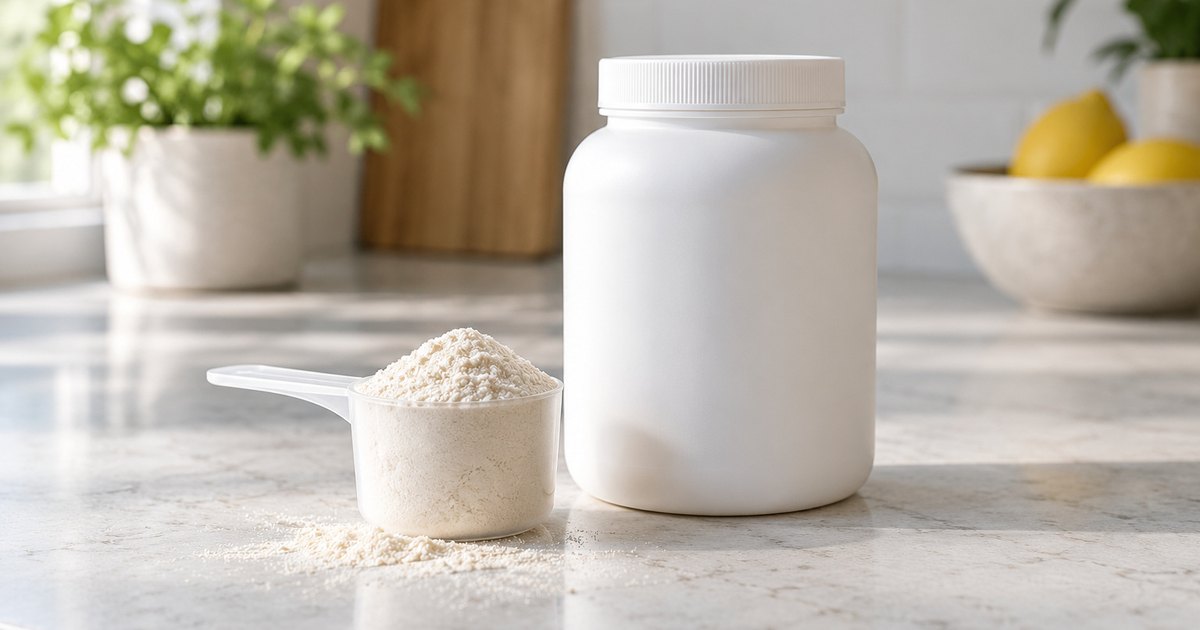
MSM (methylsulfonylmethane) is a sulfur-containing compound sold as powder, capsules and creams, usually in the joint section of the supplement aisle. Only a handful of small, short human trials have tested it, mostly measuring self-reported knee scores or markers after exercise, and the results were modest and mixed. Whether MSM is worth the money comes down to what those trials actually measured and how clearly a product is labelled, not to the promises on the tub.
This guide includes a few product links near the end. As an Amazon Associate, michelle.net.au earns from qualifying purchases, at no extra cost to you.
This guide explains what MSM is, how it differs from DMSO and glucosamine, what the research has and has not shown, how to read an MSM label, and who should talk to a doctor or pharmacist before trying it. It is general education, not personal health advice.
At a glance
- MSM is an organic sulfur compound. It occurs naturally in tiny amounts in some foods and drinks, so the MSM in supplements is made industrially.
- The human trials are few, small (around 50 people each in the best-known knee studies) and short (weeks, not years). Most measured questionnaire scores, not changes in the joint itself.
- MSM is not the same as DMSO, although the two are related and often confused.
- On the label, check the amount of MSM per serve, the full ingredient list and whether an independent testing seal is shown.
- Talk to your doctor or pharmacist first if you take other medicines, are pregnant or breastfeeding, or are buying for a teenager.
What is MSM?
MSM is short for methylsulfonylmethane, also called dimethyl sulfone. Chemically it is a small molecule containing sulfur, and it is closely related to DMSO (dimethyl sulfoxide): when the body processes DMSO, part of it is converted into MSM. That family connection is the main reason the two names get mixed up online.
According to the 2017 review of MSM by Butawan, Benjamin and Bloomer in the journal Nutrients, MSM has been detected in fruits, vegetables, grains, coffee, tea, cow’s milk and some alcoholic drinks. The same review notes that the amounts in food are extremely small, in the range of hundredths of a part per million, which is why supplements rely on MSM made in a factory rather than extracted from food.
Why MSM shows up in horse and pet products
MSM has been sold in equine and pet joint products for many years, so search results often mix human and animal products. Animal products are formulated, dosed and labelled for animals, not for people, and they are not made to human supplement standards in every country. If you are buying for yourself, buy a product made and labelled for people.
What the research has tested
Most of the human research falls into two groups: knee osteoarthritis studies and exercise studies. A few early studies have looked at skin and other areas, but they are too small or preliminary to say much about.
Knee osteoarthritis trials
The two trials cited most often both lasted 12 weeks.
- Kim and colleagues (published 2006 in Osteoarthritis and Cartilage). A pilot randomised, placebo-controlled trial in 50 men and women aged 40 to 76 with knee osteoarthritis pain. It measured scores on the WOMAC questionnaire, a standard survey of pain, stiffness and physical function. The MSM group reported lower pain and physical-function scores than the placebo group. The MSM used was supplied by its manufacturer.
- Debbi and colleagues (published 2011 in BMC Complementary and Alternative Medicine). A randomised, double-blind trial in 49 adults aged 45 to 90 with knee osteoarthritis confirmed on X-ray. The MSM group improved more than the placebo group on WOMAC physical function and the total WOMAC score, but the differences in WOMAC pain and stiffness were not statistically significant, and neither were the quality-of-life results. The authors wrote that it was yet to be determined whether the improvements were of clinical significance. Again, the manufacturer donated the MSM and placebo.
Other trials have tested MSM combined with glucosamine, chondroitin, boswellia or other ingredients. When several ingredients are given together, it is not possible to tell which one, if any, made a difference, and the Butawan review notes that some of these combination trials found no benefit over the comparison group.
Exercise and recovery trials
A second group of small studies gave MSM to healthy, active adults before or during a training block and then measured things such as muscle soreness ratings, creatine kinase (a blood marker linked to muscle damage) and markers of oxidative stress. The Butawan review describes these results as inconsistent: for example, a 14-day study using resistance exercise found no significant change in its main antioxidant marker, while a 28-day study by the same research group did. Short studies measuring blood markers do not tell you whether people performed better or felt better in daily life.
How strong is the evidence?
A 2008 systematic review by Brien and colleagues in Osteoarthritis and Cartilage looked at all the controlled trials of DMSO and MSM for osteoarthritis it could find. It included only two MSM trials, with 168 participants between them. The reviewers judged the MSM trials more rigorous than the DMSO ones, described the MSM evidence as positive but not conclusive, and stated that no definitive conclusion could be drawn for either supplement. They called for larger trials on dosing, longer-term safety and effectiveness.
Since then, the picture has not changed dramatically. The main limits are worth knowing because they apply to most of the research:
| Area tested | Typical trial size | Typical length | What was measured | Main limitation |
|---|---|---|---|---|
| Knee osteoarthritis (MSM alone) | About 50 people | 12 weeks | Questionnaire scores for pain, stiffness and function | Self-reported outcomes; manufacturer-supplied product; small samples |
| Knee osteoarthritis (combinations) | Varies | Varies | Pain scales, function scores | Cannot separate MSM’s effect from the other ingredients; some found no difference |
| Exercise and recovery | Small groups of healthy adults | Single doses to about 4 weeks | Soreness ratings, blood markers of muscle damage and oxidative stress | Markers are not the same as performance or wellbeing; mixed results |
| Skin and other uses | Very small or early studies | Short | Mixed | Too preliminary to draw conclusions |
Funding matters too. Several trials used product donated by an MSM manufacturer, and the 2017 Butawan review declares that one author was employed by the maker of the OptiMSM brand and another had received research funding from supplement companies, including MSM sellers. That does not make the findings wrong, but it is a good reason to wait for larger, independent trials before accepting the results as settled. For a general framework on weighing evidence like this, see how to judge any supplement.
MSM vs DMSO vs glucosamine
These three are often sold side by side or even in one product. This table separates them.
| Ingredient | What it is | How it is sold | What studies mostly measured | Strength of evidence (plain words) | Things to check |
|---|---|---|---|---|---|
| MSM | Small sulfur compound (dimethyl sulfone) | Powder, capsules, creams, joint blends | Knee questionnaire scores; exercise markers | Few small, short trials; modest, mixed results | Amount per serve, purity, testing seal |
| DMSO | Industrial solvent; MSM’s parent compound | Rules vary widely by country | Older osteoarthritis trials | Reviewers rated the trials weak | Not interchangeable with MSM; do not self-source |
| Glucosamine | Amino sugar from shellfish or fermentation | Tablets, capsules, powders | Knee pain and function scores, joint-space imaging | Larger body of research with conflicting results | Sulfate vs hydrochloride form; shellfish source. See what the glucosamine research found |
| MSM + glucosamine + chondroitin blends | Combination products | Tablets, powders | Pain and function scores | Hard to know which ingredient contributes | Amount of each ingredient, total tablets per serve |
Collagen products are another common item on the same shelf. If you are comparing them, the guide to collagen and joint-comfort research covers that evidence separately, and turmeric is covered in another popular joint-aisle ingredient.
Forms: powder, capsules, creams and combinations
The form changes the practical details far more than the research does. There is no good evidence that one form is absorbed better than another, so compare forms on these points:
- Powder. Usually the cheapest per gram. Plain powder is often described as bitter, which is why many people mix it into a drink. Check whether a scoop is included and what weight it holds.
- Capsules or tablets. No taste, but several capsules may be needed to reach the amount on the label’s serving size, which raises the cost per gram.
- Creams and gels. These are applied to the skin and the amount of MSM is often not stated in milligrams. The oral trials above tell you nothing about how a cream performs.
- Combination products. Often pair MSM with glucosamine, chondroitin, collagen, turmeric or vitamins. Read the full panel so you know the amount of each ingredient.
How to read an MSM label
MSM is a simple single ingredient, so a good label should make it easy to see exactly what you are paying for. The general skills in reading a supplement label all apply. Use this checklist before you buy.
Before you buy MSM: an eight-point check
- Find the amount of MSM per serve in milligrams or grams, and the number of serves in the pack.
- Work out the cost per gram: price divided by (grams per serve multiplied by serves per pack). This makes powders, capsules and blends comparable.
- Check the form and the “other ingredients” line for fillers, flavours, sweeteners and anti-caking agents.
- Decide whether you want MSM alone or a combination, and read every ingredient amount if it is a blend.
- Look for an independent testing seal, such as USP, NSF or Informed Choice, and check what that seal actually covers. The guide to what USP, NSF and Informed Sport seals mean explains the differences.
- In Australia, look for an AUST L number if the product is sold as a listed medicine. Listed medicines may only use ingredients the TGA permits, but the TGA does not assess them for effectiveness before they are listed.
- Ask a pharmacist to check it against any medicines you already take.
- Skip products made for horses or pets.
Words such as “pharmaceutical grade”, “pure” or “distilled” are marketing terms unless backed by independent testing. Some brands say their MSM is purified by distillation; that describes a manufacturing method, not a proven health difference.
Safety and who should check first
Reviews generally describe MSM as well tolerated in the short trials with few and mild side effects reported. In the United States, the FDA responded with “no questions” in 2007 to a GRAS (generally recognised as safe) notice for one branded form, OptiMSM, filed as GRN 229. That notice covers adding MSM to certain foods, such as meal replacements, smoothie-type drinks, sports-type drinks and food bars, at set levels. It is a food-safety assessment, not a finding that MSM does anything for joints.
Long-term data are thin. A 2025 re-evaluation for the Norwegian Food Safety Authority by the Norwegian Institute of Public Health considered lower daily amounts safe for use of up to four months but rated the safety of several higher amounts used in trials as uncertain. It found too little good-quality data to draw any safety conclusion for children and teenagers, and noted that many human studies were small, short and did not describe how side effects were recorded.
There is little or no safety information for pregnancy and breastfeeding, and interaction studies with medicines are lacking. The Butawan review also notes that people have asked about MSM and alcohol, but no studies have looked at it. If you take regular medicines, have a kidney or liver condition, are pregnant or breastfeeding, or are buying for someone under 18, talk to your doctor or pharmacist before using MSM.
Common mistakes
- Confusing MSM with DMSO. They are related chemicals with different uses, rules and safety profiles.
- Buying equine or pet MSM for people. It is made and labelled for animals.
- Trusting “pharmaceutical grade” without a seal. Wording on the front of the pack is not independent testing.
- Doubling up through blends. A joint blend plus a separate MSM powder can add up to more than you realise. Add the amounts together.
- Expecting the result of one small trial. Results from about 50 people over 12 weeks are a starting point, not a guarantee.
- Skipping the medicine check. Interaction data are limited, so the pharmacist conversation matters more, not less.
- Buying from overseas without checking the rules. Labelling standards and permitted amounts differ by country; see buying supplements from overseas sellers.
Sources this guide draws on: Butawan, Benjamin and Bloomer, “Methylsulfonylmethane: applications and safety of a novel dietary supplement”, Nutrients (2017); Kim and colleagues’ pilot trial in Osteoarthritis and Cartilage (2006); Debbi and colleagues’ randomised controlled trial in BMC Complementary and Alternative Medicine (2011); Brien and colleagues’ systematic review of DMSO and MSM in Osteoarthritis and Cartilage (2008); the US FDA response letters for GRAS notice GRN 229; the Norwegian Institute of Public Health’s 2025 re-evaluation of MSM for the Norwegian Food Safety Authority; and the Therapeutic Goods Administration’s information on listed medicines.
Handy kit for this guide
These are practical tools, not supplements or medicines. As an Amazon Associate, michelle.net.au earns from qualifying purchases, at no extra cost to you. Prices and availability are set by Amazon and may vary by country.
- Ezy Dose Weekly AM/PM Pill Organiser (X-Large)
Seven days with separate morning and evening compartments, so you can see at a glance what has already been taken.
View on Amazon - Vaydeer Metal 7-Day Travel Pill Case
Slim metal case with a built-in desiccant, for keeping a week of tablets dry in a bag or suitcase.
View on Amazon - Bambaw Insulated Stainless Steel Water Bottle (32 oz)
Plastic-free and keeps water cold all day, useful when a label says to take a product with a full glass of water.
View on Amazon
Frequently asked questions
What is MSM made from?
MSM is found naturally in very small amounts in foods such as fruits, vegetables, grains, milk, coffee and tea. Those amounts are far too small to extract commercially, so supplement MSM is made industrially. Some brands describe a distillation step in manufacturing; that is a process claim, not a health one.
Is MSM the same as DMSO?
No. DMSO is a solvent and MSM’s parent compound, and the body converts some DMSO into MSM. They are regulated differently, have different safety profiles and should never be swapped for one another.
Is MSM safe to take every day?
The short trials reported few and mostly mild side effects, but long-term safety has not been well studied. A 2025 Norwegian assessment rated the safety of several higher daily amounts as uncertain and could not draw conclusions for children and teenagers. Ask your doctor or pharmacist before using it regularly, especially if you take other medicines.
Can MSM be taken with glucosamine?
Many products combine them, and some trials tested combinations. Because several ingredients are given at once, those trials cannot show what MSM itself contributes. A pharmacist can check a combination against your other medicines and help you avoid doubling up.
Does MSM powder taste bitter, and why do people mix it?
Plain MSM powder is commonly described as bitter, so people often stir it into juice or another drink. Flavoured powders hide the taste but add sweeteners or flavourings, so check the “other ingredients” line.
Why is MSM sold for horses?
MSM has a long history in equine and pet joint products. Those products are formulated and dosed for animals and are not made to human supplement standards everywhere, so people should buy products made and labelled for human use.
MSM is a modestly researched ingredient with a small, short and partly industry-funded evidence base. If you decide to try it, choose on clear labelling, cost per gram and independent testing rather than on promises, and check with your doctor or pharmacist first.