
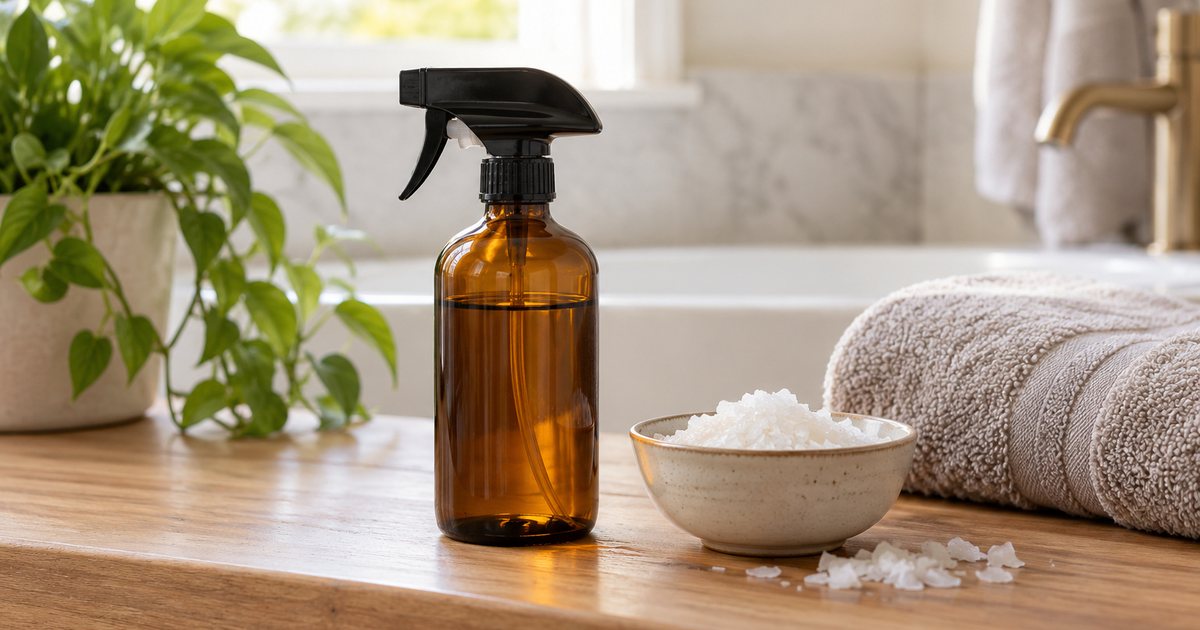
Magnesium oil is not really an oil. It is a concentrated brine of magnesium chloride dissolved in water, which feels slippery on the skin, and the small number of human studies on sprays, creams and baths have not shown that it reliably raises the body’s magnesium levels. A 2017 review in the journal Nutrients concluded that the evidence was too weak to recommend topical magnesium as a substitute for magnesium from food or tablets.
This guide includes a few product links near the end. As an Amazon Associate, michelle.net.au earns from qualifying purchases, at no extra cost to you.
This guide explains what is actually inside magnesium oil, sprays, lotions and bath flakes, what the handful of transdermal studies measured and found, why many people feel a tingle, and how to read a topical magnesium label without being misled by absorption or sleep promises.
At a glance
- “Magnesium oil” is a magnesium chloride and water solution. Magnesium flakes are usually magnesium chloride; Epsom salt is magnesium sulfate.
- Skin is built to keep charged minerals out. The 2017 Nutrients review found the studies claiming meaningful absorption were small, short or not peer reviewed.
- A 2017 pilot trial of a magnesium cream found no significant overall change in blood or urine magnesium compared with a placebo cream.
- Tingling or stinging is common and is usually linked to the salty, concentrated solution, especially on freshly shaved or broken skin.
- If you are worried about low magnesium, food and a conversation with your doctor or pharmacist are better starting points than a spray bottle.
What magnesium oil actually is
Magnesium oil, magnesium spray and “magnesium chloride liquid” usually describe the same thing: magnesium chloride salt dissolved in water at a high concentration. Some products say they come from ancient seabeds or the Dead Sea, while others are made from food-grade or pharmaceutical-grade salt. The oily feel comes from the saturated salt solution, not from any fat.
Magnesium itself is an essential mineral. The NIH Office of Dietary Supplements describes it as a cofactor in more than 300 enzyme systems, involved in muscle and nerve function, blood glucose control, blood pressure regulation and the building of bone, protein and DNA. That is why people search for “magnesium chloride benefits”. The open question is not whether magnesium matters, but whether putting it on your skin gets any useful amount into your body.
Oils, sprays, lotions, gels and flakes compared
| Product type | Usual magnesium salt | How it is used | What to check on the label |
|---|---|---|---|
| Magnesium oil or spray | Magnesium chloride in water | Sprayed on arms, legs or feet and rubbed in | Magnesium per spray or per mL, number of sprays per bottle, other ingredients |
| Magnesium lotion or cream | Usually magnesium chloride in a moisturising base | Massaged in like a body lotion | Magnesium per gram or per pump, fragrance and preservatives for sensitive skin |
| Magnesium gel | Magnesium chloride, thickened | Rubbed onto a small area | Concentration, whether it leaves a salty residue |
| Magnesium bath flakes | Magnesium chloride (often the hexahydrate form) | Dissolved in a bath or foot soak | Salt form, purity statement, recommended amount per bath |
| Epsom salt | Magnesium sulfate | Dissolved in a bath or foot soak | Whether it is labelled for bath use or as a food or medicine grade |
The chloride versus sulfate difference matters mostly for comparing products, not for any proven effect. Weight for weight, the two salts contain slightly different amounts of actual magnesium, which is one reason the elemental magnesium figure on a label is more useful than the total weight of salt.
What the transdermal magnesium studies actually measured
The most cited summary of this area is a 2017 narrative review by Gröber and colleagues in Nutrients, titled “Myth or Reality: Transdermal Magnesium?”. The authors looked at everything they could find on magnesium absorbed through skin, including sprays, creams, Epsom salt baths, spa water and the Dead Sea. Their conclusion was blunt: the evidence did not support recommending transdermal magnesium.
Why skin is a tough barrier for minerals
The outermost layer of skin, the stratum corneum, is designed to stop water loss and keep things out. The review explains that it mainly lets small fat-soluble substances through. Magnesium in solution is a charged ion surrounded by water molecules, which is a poor fit for crossing that fatty layer. One laboratory study cited in the review suggested hair follicles might offer a small route in, but follicles and sweat glands make up only a tiny fraction of the skin surface, and that study did not measure how much magnesium was actually absorbed.
The human studies, in plain language
| Study (as described in the 2017 review or the original paper) | Who and how many | What was used | What was measured | What was found |
|---|---|---|---|---|
| Kass and colleagues, PLoS One, 2017 (pilot trial) | 25 adults enrolled, single-blind, magnesium cream vs placebo cream | A cream supplying 56 mg of magnesium a day for two weeks | Blood (serum) and urine magnesium | No significant overall difference from placebo; a significant serum rise appeared only in a small non-athlete subgroup |
| Watkins and Josling, 2010 | 9 people, no control group, one dropout | Daily magnesium chloride spray plus foot soaks for 12 weeks | Hair magnesium (no blood results) | Hair magnesium rose; the review described the study as having weak statistical power and questionable quality |
| Epsom salt bath report (University of Birmingham) | 19 people, daily baths for 7 days | Magnesium sulfate baths | Blood and urine magnesium | Average rises reported, but published only on a commercial website, not in a peer-reviewed journal |
| Spa water study, 1985 | 8 people, 2-hour soak | Mineral spa water | Blood magnesium | No significant change |
| Magnesium lotion phase I study, 2009 | 34 volunteers | A magnesium-containing lotion | Blood magnesium | No significant differences reported |
Across these studies, the samples were small, follow-up was short, controls were often missing, and outcomes such as hair magnesium do not reflect what is happening in the body as a whole. Even the Kass authors, whose trial is the best designed of the group, called for larger studies with higher amounts over longer periods before conclusions could be drawn.
What about magnesium spray for sleep?
Many products are marketed with bedtime routines, and “magnesium spray for sleep” is a popular search. None of the human studies in the 2017 review measured sleep as an outcome. A warm bath or a calm evening routine may feel relaxing in its own right, but that is a different thing from evidence that magnesium crossed the skin and changed sleep. If you want to know what oral magnesium studies on sleep looked like, this site’s guide to magnesium glycinate and sleep walks through them, and sleep and healthy ageing covers the habits with better support.
Why magnesium oil tingles or stings
A tingling, itchy or stinging feeling is one of the most common complaints about magnesium oil and spraying magnesium on the skin. Marketing sometimes says this is a sign of deficiency, but this guide could not find any study supporting that idea. The simpler explanation is that a highly concentrated salt solution can irritate skin, particularly where the skin barrier is thin, dry, freshly shaved or broken. Many brands now sell diluted sprays or lotions partly for this reason.
If a product stings, washing it off is reasonable. Ongoing redness, rash or swelling is a reason to stop using it and ask a pharmacist or doctor.
Magnesium oil on feet, in baths and as flakes
Spraying magnesium oil on feet before bed and soaking in magnesium bath flakes are both widely promoted. The foot soak idea appears in the small 2010 spray study above, which combined sprays with soaks but measured hair rather than blood magnesium. The soles of the feet have a thick outer skin layer, which does not make them an obvious shortcut for absorption.
Magnesium chloride flakes and Epsom salt baths are often enjoyed simply as a warm soak. That is fine as a comfort ritual. What the evidence does not show is that a bath reliably tops up your magnesium. If someone in your household has diabetes, poor circulation or fragile skin on the feet, it is worth checking with a health professional before regular long foot soaks.
How to read a topical magnesium label
Labels for magnesium oil and sprays vary a lot, and some list only the total amount of salt rather than the magnesium itself. Use this checklist when comparing products:
- Find the elemental magnesium figure. Look for “magnesium” in milligrams per spray, per mL or per gram, not just “magnesium chloride”. If only the salt is listed, you cannot compare products fairly.
- Check the salt form. Chloride (most oils, sprays and flakes) or sulfate (Epsom salt). Neither has been shown to absorb meaningfully through skin.
- Count the realistic serve. A label might say a spray contains a certain number of milligrams, but you will lose some to drips, clothing and towels.
- Read the other ingredients. Essential oils and fragrances can irritate sensitive skin.
- Look at the claims. Absorption, sleep, cramp or “deficiency” promises on a skin product are a warning sign rather than a reason to buy.
- Check how it is regulated where you live. In some countries these are sold as cosmetics, which means they are not assessed for the claims made in advertising.
- Compare cost per use, not per bottle. Divide the price by the number of sprays or baths the bottle realistically provides.
For a general walk-through of labels, see how to read a supplement label, and for the bigger picture on why some forms of a nutrient are absorbed better than others, see supplement bioavailability.
Topical vs oral magnesium vs food
| Source | Evidence that it changes body magnesium | Main safety points | Who it may suit |
|---|---|---|---|
| Food (nuts, seeds, legumes, wholegrains, leafy greens) | The established way people meet their needs | Magnesium from food has not been shown to cause harm, according to Australia’s Nutrient Reference Values | Everyone, as the first step |
| Oral supplements | Studied far more; absorption differs by form | Upper limit for supplements applies; loose stools are the usual first sign of too much; can interact with some medicines | People advised by a doctor or pharmacist that they need extra magnesium |
| Sprays, oils, lotions, flakes | Weak and inconsistent in the studies available | Skin irritation; not a substitute when a doctor has diagnosed low magnesium | People who simply enjoy the product as a skin or bath ritual |
Australia’s Nutrient Reference Values set the adult recommended daily intake at 400 to 420 mg for men and 310 to 320 mg for women, depending on age, and set an upper level of 350 mg a day for magnesium from supplements and medicines (not food). The NIH Office of Dietary Supplements uses the same 350 mg supplemental upper limit for adults in the United States. Other countries publish their own figures. This site’s guide to magnesium foods shows how to reach your needs through meals, and how to pick the right magnesium form compares the oral options.
Who should take extra care
- People with kidney disease, because the kidneys clear excess magnesium.
- Anyone taking medicines known to interact with magnesium, such as some antibiotics and osteoporosis medicines, or medicines that affect magnesium levels, such as some diuretics and proton pump inhibitors (as listed by the NIH Office of Dietary Supplements).
- People with eczema, dermatitis or broken skin, who may find concentrated sprays irritating.
- Anyone who has been told by a doctor that their magnesium is low, because a topical product is not a proven replacement for the plan their doctor recommends.
If any of these apply, talk to your doctor or pharmacist before adding magnesium in any form.
Common mistakes
- Assuming “oil” means it moisturises. It is a salt solution and can feel drying or sticky.
- Reading tingling as proof it works. No study links the sensation to absorption or deficiency.
- Comparing bottles by salt weight. Compare elemental magnesium per serve, or you are comparing different things.
- Swapping a prescribed plan for a spray. The 2017 review specifically raised concern about replacing oral magnesium with skin products.
- Spraying on freshly shaved or broken skin. This is where stinging is most likely.
- Stacking products without counting. If you also take an oral supplement, the upper limit for supplemental magnesium still applies to that oral intake.
For a broader framework on deciding whether any supplement is worth the money, see supplements: how to choose the right ones.
Sources this guide draws on: Gröber U, Werner T, Vormann J, Kisters K, “Myth or Reality: Transdermal Magnesium?”, Nutrients, 2017; Kass L and colleagues, “Effect of Transdermal Magnesium Cream on Serum and Urinary Magnesium Levels in Humans: A Pilot Study”, PLoS One, 2017; NIH Office of Dietary Supplements, Magnesium Fact Sheet for Health Professionals; NHMRC and New Zealand Ministry of Health, Nutrient Reference Values for Australia and New Zealand (magnesium).
Handy kit for this guide
These are practical tools, not supplements or medicines. As an Amazon Associate, michelle.net.au earns from qualifying purchases, at no extra cost to you. Prices and availability are set by Amazon and may vary by country.
- Ezy Dose Weekly AM/PM Pill Organiser (X-Large)
Seven days with separate morning and evening compartments, so you can see at a glance what has already been taken.
View on Amazon - Vaydeer Metal 7-Day Travel Pill Case
Slim metal case with a built-in desiccant, for keeping a week of tablets dry in a bag or suitcase.
View on Amazon - Bambaw Insulated Stainless Steel Water Bottle (32 oz)
Plastic-free and keeps water cold all day, useful when a label says to take a product with a full glass of water.
View on Amazon
FAQ
Does magnesium oil absorb through the skin?
The studies available are small and inconsistent. The 2017 Nutrients review concluded that the evidence was not strong enough to recommend topical magnesium, and the best-designed pilot trial found no significant overall change in blood or urine magnesium compared with placebo.
What is the difference between magnesium chloride and magnesium sulfate flakes?
Magnesium chloride flakes and most magnesium oils use magnesium chloride, while Epsom salt is magnesium sulfate. They contain slightly different amounts of magnesium per gram, but neither has been shown to absorb meaningfully through skin in a bath.
Why does magnesium spray make my skin itch?
A concentrated salt solution can irritate skin, especially if it is dry, shaved or broken. Washing it off usually settles the feeling; if redness or a rash persists, stop using it and ask a pharmacist.
Is magnesium spray for sleep backed by research?
The human studies on topical magnesium did not measure sleep. Any relaxing effect of a bedtime ritual is separate from evidence that magnesium crossed the skin.
Can you use too much magnesium oil?
Because so little appears to be absorbed, the main practical problem reported is skin irritation. People with kidney disease or on interacting medicines should still check with their doctor or pharmacist before using any magnesium product.
Magnesium matters, but a spray bottle is not the proven way to get it. Start with food, read labels for the elemental figure, and bring any concern about low magnesium to your doctor or pharmacist.