
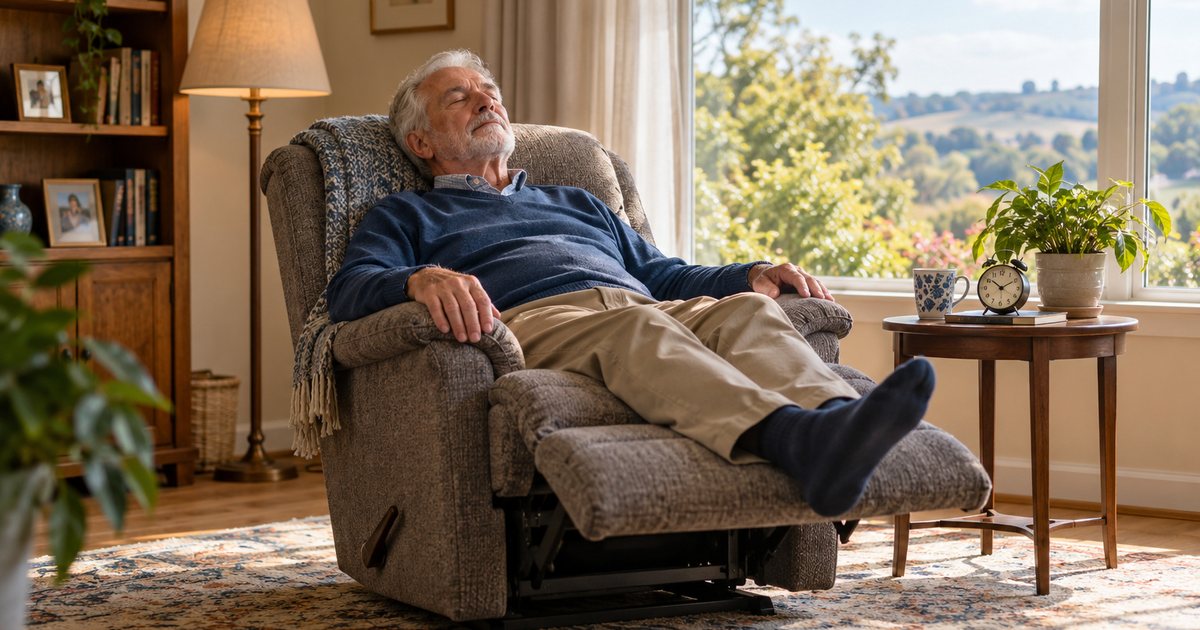
For most adults, the best nap length is about 10 to 20 minutes, taken in the early afternoon. A nap that short tends to leave you more alert soon after waking without much grogginess, and it is less likely to affect your sleep that night. Longer naps of around 90 minutes, roughly one full sleep cycle, can suit occasional catch-up after a very short night. Long daily naps after 50, though, are worth a closer look rather than simply being stretched out.
This guide includes a few product links near the end. As an Amazon Associate, michelle.net.au earns from qualifying purchases, at no extra cost to you.
This guide compares nap lengths, explains sleep inertia (the groggy feeling after some naps), sets out timing that protects night-time sleep, and summarises what the large studies of napping in older adults do and do not show.
At a glance
- A nap of 10 to 20 minutes is the safest choice for alertness with little grogginess.
- Naps of 30 to 60 minutes are more likely to wake you from deep sleep, which leaves you groggy for a while.
- A 90-minute nap covers about one full sleep cycle, but it can make it harder to fall asleep at night.
- Early afternoon is the usual sweet spot. Late-afternoon and evening naps are the most likely to disrupt night-time sleep.
- In older adults, long or frequent daytime napping has been linked with health risks in observational studies. This is a reason to look for an underlying cause, not proof that naps cause harm.
Nap lengths compared
| Nap length | What usually happens | Grogginess on waking | Effect on night sleep | Best used for |
|---|---|---|---|---|
| Under 5 minutes | Little or no real sleep | None | Minimal | A rest, but little alertness benefit in studies |
| 10 to 20 minutes | Mostly light sleep | Low | Low if taken early | Everyday “power nap” and the afternoon slump |
| About 25 to 30 minutes | Light sleep, sometimes edging deeper | Low to moderate | Low to moderate | A slightly longer rest when you have time to wake up properly |
| 30 to 60 minutes | Often reaches deep (slow-wave) sleep | Moderate to high | Moderate | Usually the least convenient length |
| About 90 minutes | Roughly one full cycle, ending in lighter sleep | Variable | Higher | Occasional catch-up after a very short night |
| Over 90 minutes, daily | Several cycles | Variable | Often noticeable | Worth discussing with a doctor if it’s a regular need |
Sleep cycles vary from person to person and from night to day, so use these bands as a rough guide rather than an exact rule.
What the research on nap length shows
The 10-minute nap study
One of the most quoted nap-length studies was published in the journal Sleep in 2006 by Brooks and Lack at Flinders University in South Australia. Volunteers whose night-time sleep had been cut to five hours tried no nap and naps of 5, 10, 20 and 30 minutes on separate afternoons. The 5-minute nap gave few benefits. The 10-minute nap gave immediate improvements in sleepiness, fatigue, vigour and mental performance, and some of these lasted around two and a half hours. The 20-minute nap helped too, but the gains appeared about half an hour after waking. The 30-minute nap first made alertness and performance worse for a short time (sleep inertia) before the benefits came through. The volunteers were not older adults, so the exact timings may differ after 50, but the pattern is a useful guide.
The NASA pilot study
A 1995 NASA study led by Mark Rosekind gave long-haul pilots a 40-minute rest opportunity in the cockpit while colleagues flew. The pilots who napped slept for about 26 minutes on average. Compared with pilots who did not nap, they showed better performance and alertness later in the flight. This is where the “NASA nap” of about 26 minutes comes from. It was a specific work setting, but it backs up the case for short, planned naps.
Sleep inertia: why some naps leave you groggy
Sleep inertia is the heavy, slow, sometimes confused feeling just after waking. It is stronger when you wake from deep slow-wave sleep, which becomes more likely the longer a nap lasts beyond about 20 to 30 minutes. It usually fades within a short time, but it matters for safety. Avoid driving, using tools, cooking on a hot stove or going down stairs in a hurry in the minutes after a longer nap. Sitting up, getting some light and having a glass of water before you move about can help you feel normal again.
Timing: when to nap so it doesn’t hurt night sleep
Most people have a natural dip in alertness in the early afternoon, often after lunch. A short nap then fits with the body clock. The longer you have been awake, the more “sleep pressure” builds up to help you sleep at night. A nap late in the day releases some of that pressure, which is why late naps are more likely to keep you awake at bedtime.
- Pick a regular window. Early afternoon suits most people. Keep it well away from your usual bedtime.
- Set an alarm. Allow a few minutes to fall asleep on top of your nap time. Twenty-five minutes of lying down usually gives about 20 minutes of rest or sleep.
- Choose the spot. A reclining chair or couch can make it easier to keep the nap short than getting into bed.
- Make it dim and quiet. An eye mask or a darkened room helps.
- Get up properly. Open the curtains, have some water and move around for a few minutes.
- Check the night. If you sleep worse on nap days, shorten the nap, move it earlier or skip it for a week and compare.
The habits that support night-time sleep, such as a steady wake time, morning light and daytime activity, are covered in sleep and ageing: what’s normal. If you find yourself dozing because you sit for long stretches, the ideas in moving more when you sit a lot can help.
Napping after 50: what the observational research does and does not mean
Napping often becomes more common with age, partly because night sleep tends to become lighter and more broken. The guide to how sleep changes as you age explains these changes. Several large studies have looked at daytime napping in older adults:
- Napping and Alzheimer’s dementia. A 2022 study in Alzheimer’s & Dementia followed about 1,400 older adults in the Rush Memory and Aging Project for up to 15 years, using wrist activity monitors to measure napping. Daytime napping increased with age, and the increase sped up after mild cognitive impairment or dementia was diagnosed. Napping more than an hour a day was associated with a higher risk of later Alzheimer’s dementia than not napping. The researchers found the relationship ran in both directions and cautioned against reading it as cause and effect, because both could reflect the same underlying brain changes.
- Napping and mortality. A 2026 study in JAMA Network Open, from the same Rush cohort (1,338 adults followed for an average of about eight years), found that longer and more frequent daytime napping, measured by activity monitors, was associated with higher all-cause mortality. Morning nappers had a higher risk than afternoon nappers.
What this means: these are associations. Long or increasing daytime sleep can be an early sign of many things, including poor night-time sleep, sleep apnoea, depression, medicine side effects, heart or lung conditions and changes in the brain. The studies do not show that a short afternoon nap is harmful, and they do not show that stopping naps would change anyone’s risk. The practical message is that a growing need for long daytime sleep is worth mentioning to your doctor.
Is your napping a sign to see a doctor?
| Pattern | Usually fine | Worth raising with a doctor |
|---|---|---|
| Length | A planned 10 to 30 minutes | Regularly sleeping more than an hour during the day |
| Frequency | Some days, or a steady daily habit | Napping more and more over months |
| Control | You choose when to nap | Falling asleep without meaning to, such as mid-conversation or while reading |
| Night sleep | Unaffected | Loud snoring, gasping or pauses in breathing noticed by a partner |
| Safety | No issues | Any drowsiness while driving. Stop driving and seek advice. |
| Other changes | None | Low mood, memory changes, new medicines, or breathlessness |
Before trying sleep products to fix tiredness, it helps to understand the evidence. See what the research says about magnesium glycinate and sleep. Sleep also matters for recovery after exercise, which is one reason a short nap can fit an active day.
Common mistakes
- Napping with no alarm. A “quick rest” can easily become 90 minutes and a groggy evening.
- Napping late in the afternoon or evening. This is the most common reason naps spoil night sleep.
- Dozing in front of the TV in the evening. It counts as a nap and can make bedtime harder.
- Using naps to cover a sleep problem. If you need long naps every day despite a full night in bed, find out why.
- Driving soon after waking. Allow time for sleep inertia to pass.
- Reading the dementia and mortality headlines as “naps are dangerous”. The research shows associations with long, frequent napping, not harm from a short planned nap.
Sources this guide draws on: Brooks and Lack, a study comparing brief afternoon nap lengths after sleep restriction (Sleep, 2006); Rosekind and colleagues’ NASA study of planned cockpit rest (1995); Sleep Foundation napping guidance; Li and colleagues on daytime napping and Alzheimer’s dementia in the Rush Memory and Aging Project (Alzheimer’s & Dementia, 2022); Gao and colleagues on daytime napping and mortality in the same cohort (JAMA Network Open, 2026).
Handy kit for this guide
These are practical everyday products, not supplements or medicines. As an Amazon Associate, michelle.net.au earns from qualifying purchases, at no extra cost to you. Prices and availability are set by Amazon and may vary by country.
- The Blue Zones Kitchen by Dan Buettner
100 everyday recipes built around beans, greens and whole grains.
View on Amazon - Bambaw Insulated Stainless Steel Water Bottle (32 oz)
Plastic-free and keeps water cold all day, at home, on walks or at the gym.
View on Amazon - Gaiam Premium 5 mm Yoga Mat
Non-slip mat for yoga, Pilates, tai chi warm-ups and floor exercises.
View on Amazon
Frequently asked questions
What is the best nap length?
For most adults, 10 to 20 minutes gives a lift in alertness with the least grogginess and the smallest effect on night sleep. A 90-minute nap can suit occasional catch-up, but it is more likely to delay bedtime.
Is a 2-hour nap bad?
An occasional long nap after a poor night is not a cause for alarm. Regularly needing two hours of daytime sleep, especially after 50, is worth discussing with your doctor. Large studies have linked long daily napping with health problems that may not yet have been diagnosed.
What time should I stop napping?
Early afternoon suits most people. The later the nap, the more likely it is to make falling asleep at night harder. If your nights are worse on nap days, move the nap earlier or shorten it.
Why do I feel worse after a nap?
This is sleep inertia, the grogginess that comes from waking out of deep sleep. It is more likely after naps of about 30 to 60 minutes. Keep naps shorter, or allow time to wake up fully before doing anything that needs care.
Is napping good for older adults?
A short, planned early-afternoon nap suits many older adults and is generally less likely to interfere with night sleep than a long or late one. Long, frequent or unplanned daytime sleep deserves a conversation with a doctor.
How long is a power nap?
A power nap usually means about 10 to 20 minutes. That is long enough to rest and short enough to wake from light sleep. Set an alarm for a few minutes longer than your target to allow time to drift off.
Keep it short, keep it early and set an alarm. If you notice you need more and more daytime sleep, see that as useful information to share with your doctor, not something to put up with.