
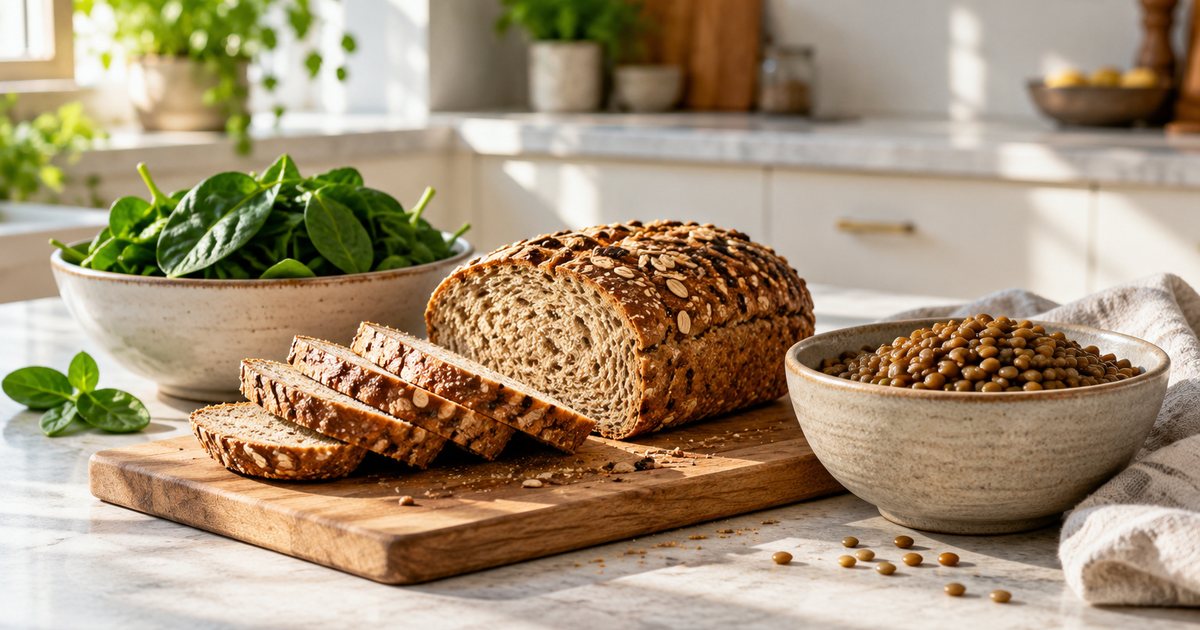
Folic acid is the man-made form of folate, a B vitamin (B9) the body needs to make DNA and to form healthy red blood cells. It is used in three main ways: in supplements, in fortified foods such as bread-making flour in Australia and New Zealand and enriched grains in the US, and in medicines that doctors prescribe for diagnosed folate deficiency. Its best-known use is in early pregnancy. Health authorities including Australia’s NHMRC, the US CDC and the UK government advise folic acid around conception because adequate folate lowers the risk of neural tube defects such as spina bifida.
This guide includes a few product links near the end. As an Amazon Associate, michelle.net.au earns from qualifying purchases, at no extra cost to you.
This guide explains the difference between folate, folic acid and methylfolate on a label, how “mcg DFE” works, where folic acid is added to food in different countries, the upper limit, and why older adults in particular should know how folic acid and vitamin B12 interact. It describes official recommendations. It is not personal dosing advice.
At a glance
- Folate is the natural form found in food. Folic acid is the stable, synthetic form used in supplements and fortified foods.
- Folic acid is absorbed better than food folate, which is why labels use mcg DFE (dietary folate equivalents).
- Australia, New Zealand, the US and Canada already add folic acid to some flour or grain products. The UK requires it in non-wholemeal wheat flour from December 2026.
- The upper limit of 1,000 mcg a day applies to folic acid from supplements and fortified foods, not to folate in ordinary food.
- High folic acid intake can hide the anaemia of low B12 while the nerve effects continue. This matters most for adults over 50.
What is folic acid used for?
Folate helps cells divide and copy their DNA, and the body needs it to make red blood cells. Because folate in food breaks down with cooking and storage, folic acid was developed as a stable form that can be added to products. Its main uses are:
- Pregnancy planning and early pregnancy. Official advice in many countries is for women who could become pregnant to take folic acid, because the neural tube forms in the first weeks, often before a pregnancy is known.
- Food fortification. Some countries add folic acid to flour or grain products by law so that the whole population, including people with unplanned pregnancies, gets more of it.
- Multivitamins and B complexes. Many general supplements include it.
- Prescribed medical use. Doctors prescribe folic acid to correct folate deficiency that has been diagnosed with blood tests. They may also prescribe it alongside certain medicines, such as methotrexate. Dosing in these cases is set by the prescriber.
For how folate fits with the other vitamins, see the starter guide to vitamins and minerals.
Folate vs folic acid vs methylfolate
| Form | Where you find it | How it shows on labels | Counts towards the folic acid upper limit? |
|---|---|---|---|
| Food folate | Leafy greens, legumes, some fruits and other plant foods | Usually not listed separately on a food label | No |
| Folic acid | Supplements, fortified flour, bread and cereals | “Folic acid”, or folate in mcg DFE with the folic acid amount in brackets | Yes |
| L-methylfolate (5-MTHF) | Some prenatal, “methylated” and B-complex supplements | Calcium L-methylfolate, levomefolate, 5-MTHF | Yes, under the EU’s 2023 upper limit. Other authorities’ limits were written for folic acid. |
| Folinic acid | Mostly prescription medicines, and some supplements | Calcium folinate, leucovorin | Used under medical supervision |
Methylfolate is often marketed as an “active” form for people with a common MTHFR gene variation. The CDC has said that people with this variation can process folic acid, and it continues to recommend folic acid for women who could become pregnant. If you have been told to use a specific form, follow your doctor’s advice. The guide to supplement bioavailability covers why “more absorbable” claims need a careful read.
How to read folate on a label
- Find the unit. US-style labels list folate in mcg DFE. A product with 400 mcg of folic acid shows 680 mcg DFE, because folic acid taken with food counts as about 1.7 times the value of food folate.
- Look for the bracket. US labels usually give the actual folic acid amount in brackets after the DFE figure. That bracketed number is the one to compare with the upper limit.
- Check the form. Look for folic acid, calcium L-methylfolate or folinic acid.
- Use the daily dose. If the amounts are per tablet and the label directs two tablets, double them.
- Add up every product. Prenatal supplements, multivitamins, B complexes and fortified cereals or drinks can all contain folic acid.
- Remember fortified bread. In Australia and New Zealand most bread contains folic acid from fortified flour. It is part of your intake even though you can’t see it on the supplement label.
Australian supplement labels list the amount of each ingredient per tablet rather than in DFE. The general approach in how to read a supplement label applies.
Folic acid in food: what different countries do
| Country or region | What is fortified | Since |
|---|---|---|
| Australia | Wheat flour for bread making (organic flour exempt) | September 2009 |
| New Zealand | Non-organic wheat flour for bread making | 2023 |
| United States | Enriched cereal grain products such as flour, bread, pasta and rice | 1998 |
| United Kingdom | Non-wholemeal wheat flour, at 0.25 mg per 100 g. Wholemeal and gluten-free flours are excluded. | By law from December 2026 |
| European Union | No EU-wide mandatory fortification. Voluntary addition varies by country. | Not applicable |
In Australia, monitoring by Food Standards Australia New Zealand found a substantial rise in folic acid intake after fortification, with bread as the main source. An Australian Institute of Health and Welfare review reported that the overall rate of neural tube defects fell by about 14% after fortification began, with larger falls among babies born to teenage mothers and to Aboriginal and Torres Strait Islander women. The UK government has given the same reason, low folate as a known cause of neural tube defects, for its decision to fortify. If you buy supplements or food from overseas, remember that fortification and labelling rules differ. See buying supplements overseas.
Official pregnancy recommendations
Advice from health authorities is broadly consistent. It is set out here as they state it, not as personal advice.
- Australia (NHMRC): women are advised to take a folic acid supplement for at least one month before conception and for the first three months of pregnancy. The standard amount cited is 400 micrograms a day.
- United States (CDC): all women who could become pregnant are advised to get 400 micrograms of folic acid every day, in addition to folate from food.
- United Kingdom: pregnant women and those planning pregnancy should still take a 400 microgram folic acid supplement, even after flour fortification.
Some women are advised to take a higher dose. This includes those with a previous pregnancy affected by a neural tube defect, some medical conditions, or certain medicines. That decision belongs with a GP, obstetrician or midwife. With up to half of pregnancies unplanned, this is one reason governments chose fortification as well as supplement advice.
The upper limit and the B12 issue for older adults
Australia and New Zealand (NHMRC), the US National Academies and the European Food Safety Authority all set an adult upper limit of 1,000 mcg a day for folic acid from supplements and fortified foods. Food folate is not included. The EU’s 2023 limit also covers added methylfolate.
The main reason for the limit is vitamin B12. A lack of B12 causes a type of anaemia that looks like folate-deficiency anaemia under the microscope, and it can also damage nerves. Large amounts of folic acid can correct the blood picture while the nerve damage carries on, which can delay diagnosis. This is especially relevant after 50, because absorption of B12 from food tends to fall with age, and some medicines are associated with lower B12. If you take folic acid and notice tingling, numbness, balance problems or memory changes, ask your doctor about checking your B12. The vitamin B12 guide explains testing and forms.
Research on high folic acid intakes and other long-term outcomes is still under way, and the findings are mixed. A 2013 Food Standards Australia New Zealand meta-analysis of folic acid trials found no meaningful effect on overall death rates. Staying within the upper limit unless a doctor advises otherwise remains the sensible default.
Is folic acid iron?
No. Folic acid is a B vitamin, and iron is a mineral. They are often packaged together because both matter for red blood cells and both are commonly recommended in pregnancy. World Health Organization antenatal guidance, for example, includes iron and folic acid supplementation. A combined tablet still has two separate ingredients, each with its own amount and upper limit. If you have been told to take iron, the guide to iron supplements covers how to take it safely.
Common mistakes
- Reading DFE as the folic acid amount. 680 mcg DFE is 400 mcg of folic acid. Use the bracketed figure.
- Forgetting fortified bread and cereals. These count towards your folic acid intake.
- Doubling up products. A prenatal supplement plus a multivitamin plus a B complex can add up to more than intended. The guide to multivitamins after 50 shows how to compare labels.
- Assuming methylfolate is exempt from limits. Under the EU limit it is not, and it is still a concentrated source.
- Starting folic acid late. Official advice is to start before conception, because the neural tube forms very early.
- Taking folic acid to cover tiredness without testing. If low B12 is the cause, folic acid can hide it.
Sources this guide draws on: NIH Office of Dietary Supplements Folate fact sheet for health professionals; NHMRC Nutrient Reference Values for Australia and New Zealand and NHMRC advice on folic acid before and during pregnancy; Food Standards Australia New Zealand information on mandatory folic acid fortification and its monitoring reports; Australian Institute of Health and Welfare monitoring of neural tube defects after fortification; UK government guidance on folic acid fortification of flour; US CDC folic acid recommendations; European Food Safety Authority 2023 opinion on folate upper intake levels; World Health Organization antenatal care recommendations.
Handy kit for this guide
These are practical everyday products, not supplements or medicines. As an Amazon Associate, michelle.net.au earns from qualifying purchases, at no extra cost to you. Prices and availability are set by Amazon and may vary by country.
- The Blue Zones Kitchen by Dan Buettner
100 everyday recipes built around beans, greens and whole grains.
View on Amazon - The Complete Mediterranean Cookbook (America’s Test Kitchen)
500 kitchen-tested recipes with plenty of fish, legumes and vegetables.
View on Amazon - Etekcity Digital Kitchen Scale
Reads in grams, handy for portions, recipes and checking a scoop against a label.
View on Amazon
Frequently asked questions
What is folic acid used for in women?
Its best-known use is before and in early pregnancy. Health authorities advise folic acid for women who could become pregnant because adequate folate lowers the risk of neural tube defects. Doctors may also prescribe it for diagnosed folate deficiency. Ask your GP what applies to you.
What is the difference between folate and folic acid?
Folate is the natural form in foods such as leafy greens and legumes. Folic acid is the synthetic, more stable form used in supplements and fortified foods, and the body absorbs it more efficiently. That is why labels convert both into dietary folate equivalents.
Can you take too much folic acid?
Yes. Health authorities set an adult upper limit of 1,000 mcg a day from supplements and fortified foods. The main concern is that high intakes can hide low B12. Check every label you take and discuss higher amounts with your doctor.
Is folic acid a vitamin?
Yes. It is a form of vitamin B9 (folate). It is often called a “folic acid vitamin” on packaging and is included in most multivitamins and B complexes.
Do older adults need folic acid supplements?
Many older adults get enough folate from food and fortified bread. The bigger issue after 50 is often B12, and high folic acid can mask a deficiency. Talk to your doctor or pharmacist before adding a supplement.
Does bread in Australia have folic acid?
Most does. Wheat flour for bread making has been fortified with folic acid since September 2009. Organic flour is exempt, so some organic breads contain less.
Folic acid is a small ingredient with a well-defined job. Know which form is on your label, count fortified foods, stay within the upper limit, and leave pregnancy and medical dosing to your doctor.