
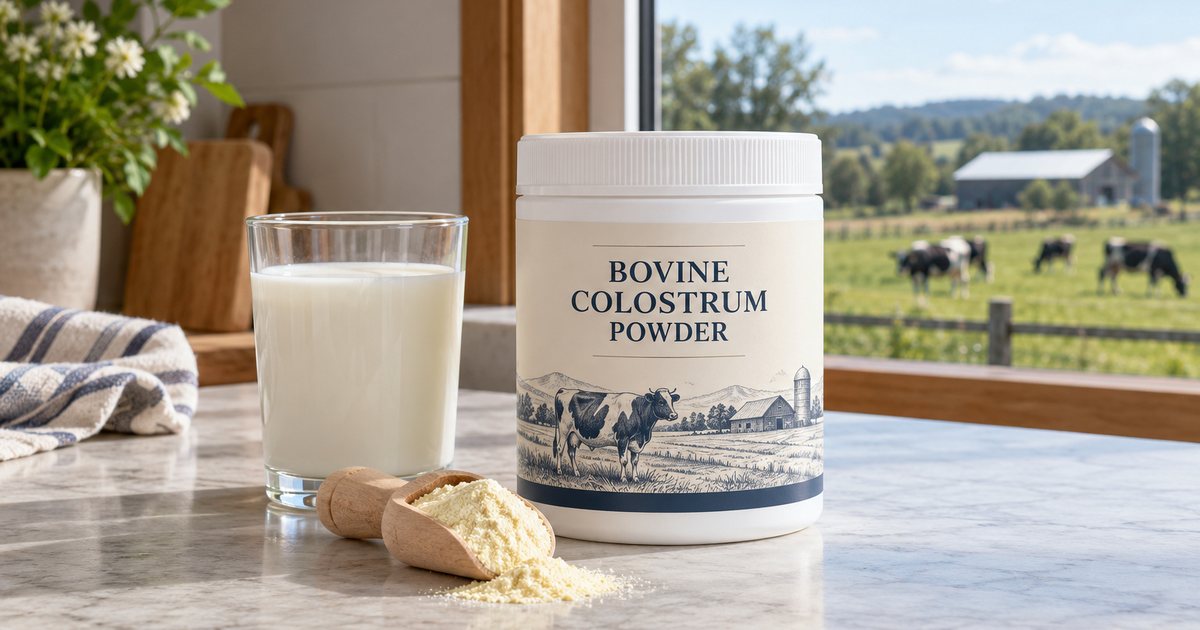
Colostrum is the first milk a mammal produces after giving birth, and when people search for colostrum benefits they usually mean one of two very different things: human colostrum in early breastfeeding, or bovine (cow) colostrum sold as a powder or capsule supplement. For bovine colostrum supplements, the evidence is limited: most trials are small, short and in young athletes, and the results so far are mixed.
This guide includes a few product links near the end. As an Amazon Associate, michelle.net.au earns from qualifying purchases, at no extra cost to you.
This guide separates the two meanings, explains what is in bovine colostrum, summarises what the human trials actually measured (with their sizes), shows how to read a colostrum powder label, and covers the safety points, especially dairy allergy, that are worth raising with your doctor or pharmacist. It makes no promises about results, because the research does not support making them.
At a glance
- Two meanings: human colostrum is the first breast milk for newborns; bovine colostrum is collected from cows in the first days after calving and dried into supplements.
- What’s in it: milk proteins including immunoglobulins (antibodies, mainly IgG), lactoferrin and growth factors, plus fat, lactose and other milk components.
- The research is small: one meta-analysis of five trials (152 endurance-trained adults) reported fewer self-reported upper respiratory symptom days, but the authors called the evidence low in precision and other reviewers have reached more cautious conclusions.
- Gut permeability studies have involved 12 to 18 healthy, active young men over two weeks.
- It is a dairy product: people with cows’ milk allergy should avoid it, and anyone with a medical condition should talk to their doctor first.
Human colostrum vs bovine colostrum
Human colostrum is produced in late pregnancy and the first few days after birth. It is thick, often yellowish, produced in small amounts, and is the first food for a newborn. Health authorities such as the World Health Organization encourage early breastfeeding partly so that babies receive it. If you are searching for information about colostrum while breastfeeding, your midwife, child health nurse or lactation consultant is the best source of advice.
Bovine colostrum comes from dairy cows in the first days after calving. It is collected, usually pasteurised, and dried into powder that is sold loose, in capsules, or as liquid colostrum. These products are the focus of the rest of this guide.
| Feature | Human colostrum | Bovine colostrum supplements |
|---|---|---|
| Who it is for | Newborn babies | Adults who choose to buy a supplement |
| Where it comes from | The mother, in late pregnancy and the first days after birth | Dairy cows, in the first days after calving |
| Form | Fresh breast milk | Powder, capsules, chewables or liquid |
| Regulation | Not a product | Sold as a food or supplement; rules differ by country |
| Who to ask | Midwife, lactation consultant or doctor | Doctor, pharmacist or dietitian |
What’s in bovine colostrum?
Compared with mature milk, colostrum is richer in a range of bioactive proteins. Reviews of the research describe these as:
- Immunoglobulins (antibodies): mostly immunoglobulin G (IgG). In calves, these antibodies are absorbed in the first day of life. In adults, they are digested like other proteins, and how much survives digestion is uncertain.
- Lactoferrin: an iron-binding milk protein.
- Growth factors: such as insulin-like growth factor 1 (IGF-1) and epidermal growth factor.
- Ordinary milk nutrients: protein, fat, lactose, vitamins and minerals.
Memorial Sloan Kettering Cancer Center’s integrative medicine information also notes that colostrum contains trace amounts of oestrogen, which is one reason people with hormone-sensitive cancers are advised to discuss it with their doctor first.
What the bovine colostrum trials actually measured
Most of the human research has been done in healthy, young, physically active adults, often men. Few trials have looked at older adults, and the studies are generally small and short.
| Study | Who took part | What was tested | What was reported |
|---|---|---|---|
| Jones and colleagues, systematic review and meta-analysis, BMC Sports Science, Medicine and Rehabilitation, 2016 | 5 trials, 152 adults in regular endurance training (about 80% men; trials of 10 to 53 people) | 10 g or 20 g a day of colostrum powder for 8 to 12 weeks vs control, with self-reported upper respiratory symptoms | Fewer days with self-reported upper respiratory symptoms; four of five trials had moderate or high risk of bias, and symptoms were not confirmed by a doctor or testing |
| Marchbank and colleagues, American Journal of Physiology, 2011 | 12 volunteers, crossover design | Colostrum or placebo for 14 days, then a standardised hard exercise session | The rise in a urine test of gut permeability after exercise was smaller in the colostrum phase |
| March and colleagues, European Journal of Applied Physiology, 2017 | 18 healthy, regularly exercising men (average age 26), crossover design | 20 g a day for 14 days vs a milk protein placebo, then a 20-minute hard treadmill run | The post-exercise rise in the gut permeability measure was smaller with colostrum |
How to read these results
- Small numbers: the combined meta-analysis involved 152 people; the gut studies involved 12 and 18.
- Specific populations: young athletes in hard training are not the same as healthy older adults going about everyday life.
- Lab markers, not outcomes: a lower urine permeability ratio after a treadmill run is a laboratory measure; it does not show any effect on symptoms or health in daily life.
- Mixed conclusions: the 2016 meta-analysis authors said larger, adequately powered trials are needed to confirm their findings, and Memorial Sloan Kettering’s summary describes the overall evidence for colostrum as preliminary.
- Product differences: trials used specific products and amounts, and results may not apply to other brands.
In short, bovine colostrum is an active area of research, but the evidence does not support the sweeping benefit claims found on many product pages. The guide to judging supplement evidence explains how to weigh small trials like these.
Colostrum powder labels: what to check
- Source animal. Most products are bovine; goat colostrum is also sold. Both are dairy products.
- IgG content. Many labels state an IgG percentage or milligrams per serve. Check whether the figure is per serve or per 100 g, and remember a higher IgG figure has not been shown to mean more benefit in adults.
- Collection timing. Some labels say “first milking” or give a time window after calving. These claims are hard for shoppers to verify.
- Sourcing claims. “Grass fed” describes how the cows were raised; it is a farming claim rather than evidence about the product’s effects.
- Processing. Look for pasteurisation and how the powder was dried. Liquid colostrum products should have clear storage and use-by instructions.
- Other ingredients. Sweeteners, flavours, probiotics or added vitamins change what you are buying.
- Allergen statement. It should clearly state that the product contains milk.
- Testing and regulation. Look for independent testing, and check how products are regulated where you live. The guide to supplement certification seals explains what common seals mean, and how to read a supplement label covers the rest of the panel.
Price per serve
Colostrum is usually one of the more expensive powders per gram. When comparing products, work out the cost per serve rather than per tub, and consider whether ordinary protein foods or a standard protein powder already meet the need you have in mind. The guide to protein powder types covers that comparison.
Colostrum vs collagen
Colostrum and collagen are often sold side by side, but they are very different products.
| Feature | Bovine colostrum | Collagen peptides |
|---|---|---|
| What it is | The whole first milk of cows, dried | A single structural protein, broken into peptides |
| Usual sources | Dairy cows (sometimes goats) | Cattle hides and bones, pigs, or fish skin and scales |
| Key components | Immunoglobulins, lactoferrin, growth factors, milk protein, lactose, fat | Mainly the amino acids glycine, proline and hydroxyproline |
| Dairy allergy concern | Yes, contains milk proteins | Not a dairy product, but check for fish or other allergens |
| Typical research focus | Athletes, gut permeability markers, self-reported respiratory symptoms | Skin and joint measures |
If you are weighing up collagen instead, see how to compare collagen brands and bovine vs marine collagen.
Safety: who should check first
- People with cows’ milk allergy should avoid colostrum, which contains milk proteins. Allergy organisations such as the Australasian Society of Clinical Immunology and Allergy advise people with milk allergy to avoid cows’ milk products, and goat milk proteins are often similar enough to cause reactions too.
- People with lactose intolerance may react to the lactose in colostrum; options are covered in lactose-free protein powder.
- People with hormone-sensitive cancers should discuss it with their doctor because of the trace hormones.
- Pregnant or breastfeeding women should seek medical advice; safety information is limited.
- Anyone taking regular medicines or managing a health condition should talk to their doctor or pharmacist before starting.
- Buying from overseas: import rules, labelling standards and quality vary; the guide to buying supplements overseas explains what to check.
Common mistakes
- Mixing up human and bovine colostrum. Information about breastfeeding does not apply to cow colostrum powders.
- Reading athlete studies as everyday evidence. Results from young men in hard training may not apply to older adults.
- Chasing the highest IgG percentage. No research shows that a higher number on the label gives adults more benefit.
- Forgetting it is dairy. Milk allergy and lactose intolerance still apply.
- Believing sales copy. Most top-ranking pages are written by sellers; check what the trials measured and how many people took part.
- Skipping the conversation with your doctor. Particularly important if you have a medical condition, take medicines or are pregnant.
Sources this guide draws on: Jones AW and colleagues, systematic review and meta-analysis of bovine colostrum and upper respiratory symptoms during exercise training, BMC Sports Science, Medicine and Rehabilitation, 2016; Marchbank T and colleagues, bovine colostrum and gut permeability after heavy exercise, American Journal of Physiology: Gastrointestinal and Liver Physiology, 2011; March DS and colleagues, bovine colostrum and intestinal permeability after exercise, European Journal of Applied Physiology, 2017; Memorial Sloan Kettering Cancer Center, About Herbs: Bovine Colostrum; Australasian Society of Clinical Immunology and Allergy (ASCIA) information on cows’ milk allergy; World Health Organization breastfeeding guidance.
Handy kit for this guide
These are practical tools, not supplements or medicines. As an Amazon Associate, michelle.net.au earns from qualifying purchases, at no extra cost to you. Prices and availability are set by Amazon and may vary by country.
- Ezy Dose Weekly AM/PM Pill Organiser (X-Large)
Seven days with separate morning and evening compartments, so you can see at a glance what has already been taken.
View on Amazon - Vaydeer Metal 7-Day Travel Pill Case
Slim metal case with a built-in desiccant, for keeping a week of tablets dry in a bag or suitcase.
View on Amazon - Bambaw Insulated Stainless Steel Water Bottle (32 oz)
Plastic-free and keeps water cold all day, useful when a label says to take a product with a full glass of water.
View on Amazon
Frequently asked questions
What are the benefits of colostrum?
For newborns, human colostrum is the first breast milk and an important part of early feeding. For bovine colostrum supplements in adults, small trials in athletes have looked at self-reported respiratory symptoms and gut permeability markers, with mixed and preliminary results. No firm benefit has been established.
Is colostrum powder safe?
Short trials in healthy adults have not reported major problems, but colostrum is a dairy product and should be avoided by people with cows’ milk allergy. People with hormone-sensitive cancers, pregnant women and anyone on regular medicines should check with their doctor or pharmacist first.
Is goat colostrum different from bovine colostrum?
Goat colostrum comes from goats rather than cows and has a broadly similar make-up. It has been studied far less in humans, and people with cows’ milk allergy often react to goat milk proteins as well.
Is liquid colostrum better than powder?
There is no good evidence that one form works better than another. Liquid products need careful storage, while powders are more stable; compare the amount per serve, processing and price.
Can I take colostrum and collagen together?
They are different products with different ingredients, and there is little research on taking them together. If you are considering both, ask your pharmacist whether either suits your health and medicines, and compare the cost against the evidence.
Bovine colostrum is an interesting food with a small, early body of research behind it. Read past the marketing, check what the trials actually measured, and talk to a health professional before deciding whether it is worth your money.