
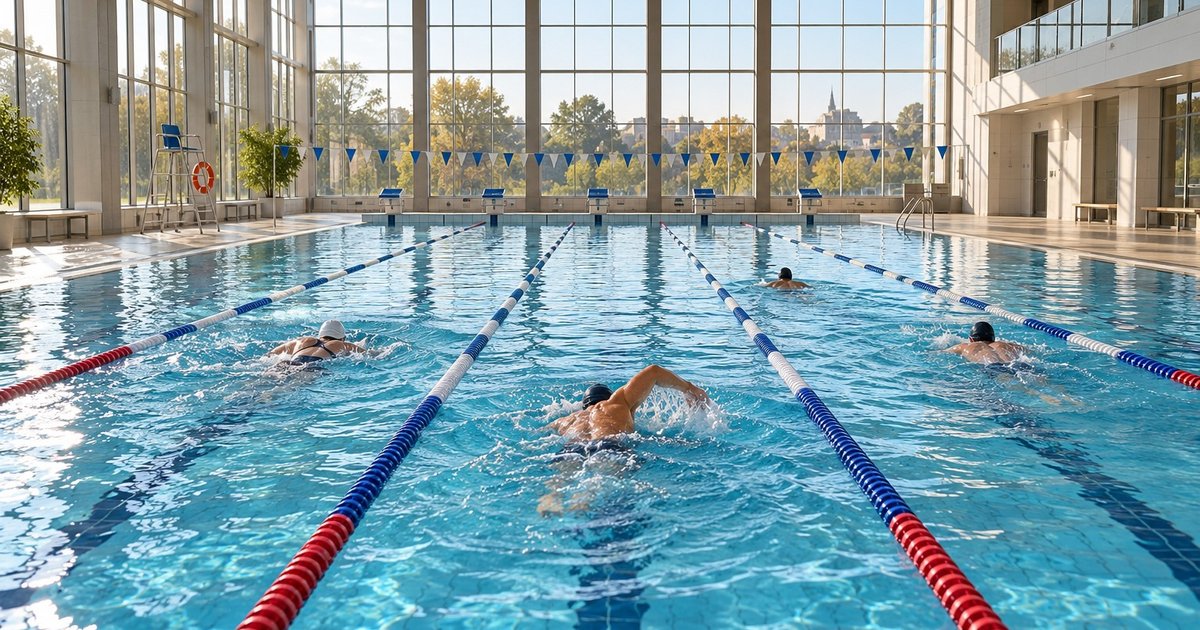
To make the most of your local swimming pool as an adult, check the timetable for adult lessons, aqua classes, lap lanes and warm-water sessions, go at a quiet time for your first visit, start with short, easy sessions in the shallow end, and ask the front desk about casual entry, concessions and membership terms before you commit. You do not need to be a strong swimmer: many pools offer adult learn-to-swim and aqua classes in water you can stand in.
This guide includes a few product links near the end. As an Amazon Associate, michelle.net.au earns from qualifying purchases, at no extra cost to you.
This guide explains the types of pools you may find near you, what is usually on offer, how to choose a lane and follow lane etiquette, a simple first routine, hygiene and water safety, accessibility features to ask about, and a checklist for comparing memberships, wherever you live.
At a glance
- Match the pool to your goal: lap pools for fitness, programme pools for lessons and aqua classes, warm-water pools for gentle movement.
- Swim at supervised times, especially if you are out of practice or not confident.
- Start small: 15 to 20 minutes is plenty for a first session.
- Learn lane etiquette: choose a lane at your pace, keep left or right as signed, and rest in the corner.
- Health first: if you have a heart or lung condition, epilepsy, are pregnant, or have not exercised for a while, check with your doctor before starting.
Types of pools you might find near you
| Pool type | What it usually offers | Water feel | Best for | Things to check |
|---|---|---|---|---|
| Council or municipal pool | Lap pool, often a learners’ pool, lessons and lane sessions | Lap water is kept cooler for swimming | Affordable regular laps | Seasonal opening for outdoor pools; lane hours |
| Leisure or aquatic centre | Several pools: lap, programme, children’s play, sometimes spa or sauna | Programme pools are usually warmer | Families and mixed goals | Busy times; what entry includes |
| Gym or health club pool | Smaller pool, often 15 to 25 m (49 to 82 ft) | Varies | People already using the gym | Whether swimming is included; quiet hours |
| Outdoor pool, lido or ocean baths | Seasonal or year-round heated pools; tidal pools by the sea | Varies with weather and season | Fresh air and summer swimming | Sun protection, weather closures, supervision and conditions |
| Heated indoor pool | Year-round swimming | Warmer and more predictable | People who feel the cold | Water temperature in each pool |
| Hydrotherapy or warm-water pool | Shallow, noticeably warmer water for gentle exercise, often with professional supervision | Warm | Gentle movement and people with mobility limits | Whether sessions are public or by referral from a health professional |
Many council pools are 25 m (82 ft) long, and larger complexes may have 50 m (164 ft) pools. If you also enjoy warm rooms after a swim, the guide to commercial saunas explains what to check before using a facility sauna.
What is on offer at most pools
Lap lanes and lane etiquette
Lanes are usually marked slow, medium and fast, and sometimes by activity, such as aqua jogging or kickboard work. A few courtesies make lanes work for everyone:
- Choose the right lane. Watch for a minute before getting in, and move lanes if you have misjudged it.
- Follow the direction. Most lanes use circle swimming; signs show which side to keep to.
- Let faster swimmers pass. If someone taps your foot, pause at the end and let them go.
- Rest in the corner, so others can turn.
- Leave a gap of a few seconds after the swimmer in front before pushing off.
Aqua aerobics and aqua fitness
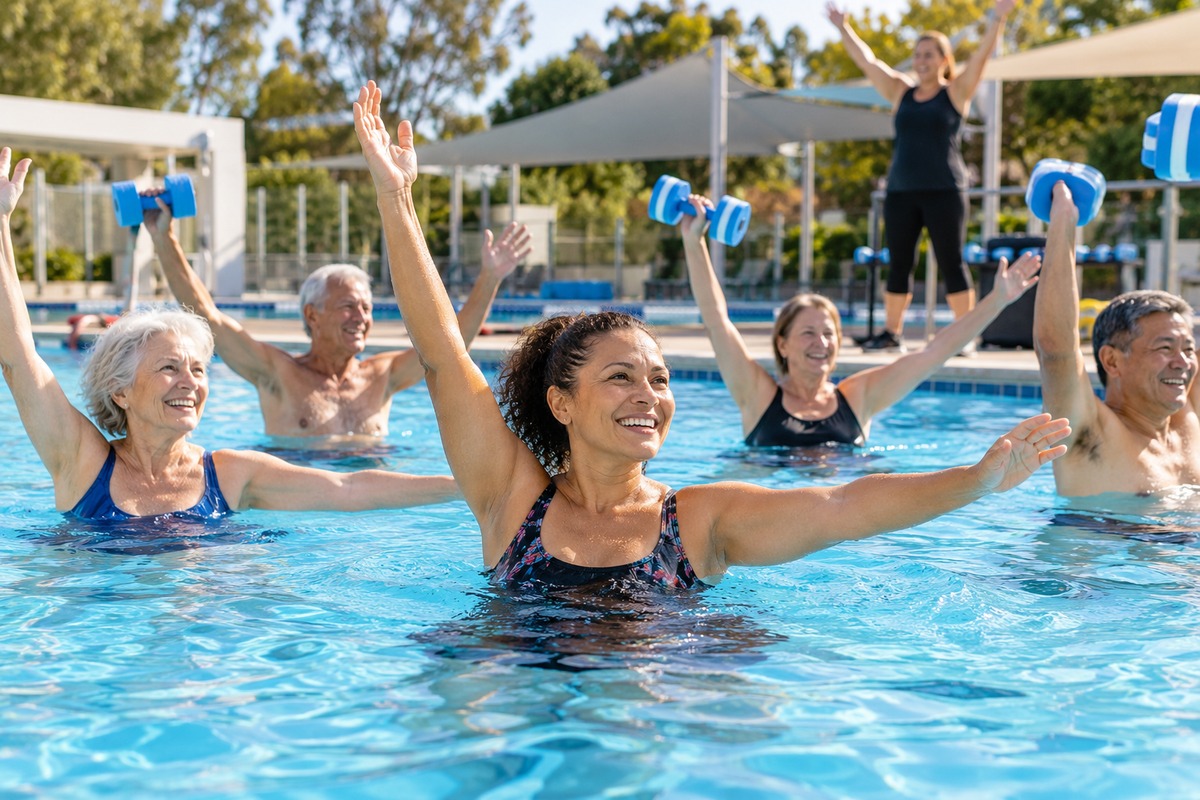
Aqua classes are instructor-led sessions, usually to music, often in water around chest depth, so most do not require swimming ability. They may include water walking and jogging, stretching, deep-water running with a float belt, or more energetic interval sessions. Water supports some of your body weight, so many people find aqua fitness a low-impact way to stay active.
Adult learn-to-swim and stroke correction
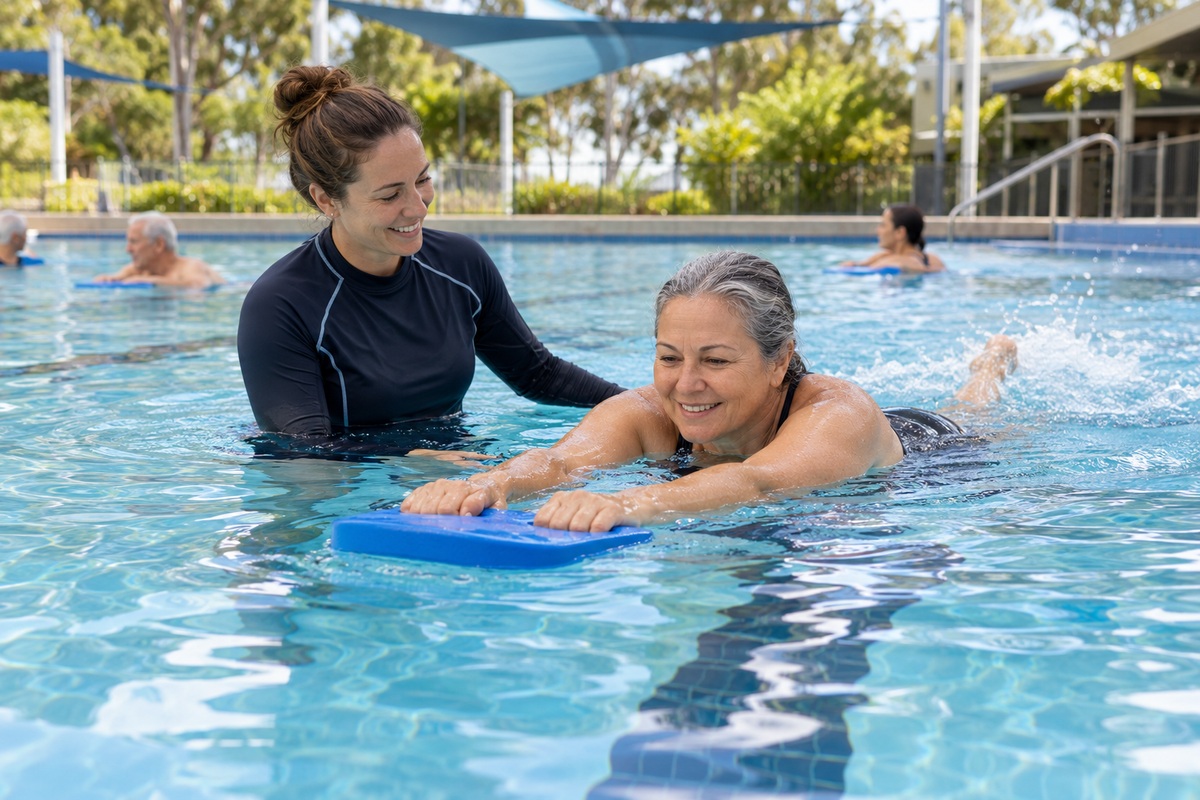
It is never too late to learn. Many pools run adult-only lessons in small groups, in a quieter part of the pool, with instructors used to nervous beginners. If you can swim but find it tiring or awkward, look for stroke correction or improver classes; a few sessions on breathing and body position often make swimming feel much easier.
Masters squads
“Masters” usually just means adult swimmers. Many squads welcome all speeds, from fitness swimmers to those who enjoy racing. A coach sets the session and you swim with people of a similar pace.
Open or general swim times
These are times for relaxed swimming, floating or family play. School carnivals, lessons and club bookings can take over lanes at certain hours, so check the timetable.
Which option suits you
| If you are | A good place to start | Why |
|---|---|---|
| Unable to swim or nervous in water | Adult learn-to-swim lessons | Small groups, shallow water and instructors trained for beginners |
| Able to swim but out of practice | Quiet lap sessions in a slow lane, or a stroke correction class | Low pressure; builds confidence and technique |
| Wanting exercise without needing to swim | Aqua aerobics | Standing depth, guided, social |
| Living with stiff joints or limited mobility | Warm-water sessions, ideally supervised | Warmer, shallower water and professional guidance |
| A confident swimmer wanting structure | Masters squad | Coached sessions with people at your pace |
Getting started if you are out of practice
- Ask staff when the pool is quietest. Mid-morning and early afternoon on weekdays are often calmer than early mornings and after work.
- Start in the shallow end. Walk a few widths, get used to the water, and practise putting your face in and blowing bubbles.
- Keep the first session short, around 15 to 20 minutes.
- Use the equipment. Kickboards and pull buoys let you keep moving while resting tired arms or legs.
- Tell the lifeguard you are getting back into it. That is exactly what they are there for.
A simple first lap routine
- Warm up, about 5 minutes: walk in the water, then swim a few easy lengths in any stroke.
- Main set, 10 to 20 minutes: swim one or two lengths, rest at the wall for 20 to 30 seconds, and repeat. Mix in kickboard lengths if your arms tire.
- Cool down, about 5 minutes: slow swimming or walking, then gentle stretches at the side.
As you grow more comfortable, add a few repeats, shorten rests or add another session. The World Health Organization recommends that adults, including older adults, aim for 150 to 300 minutes of moderate activity a week, plus muscle-strengthening activity on two or more days; older adults are also encouraged to include balance and strength work on three or more days. Swimming counts towards the activity minutes but is non-weight-bearing, so it is worth pairing with land-based work; see strength training and bone density, balance habits for healthy ageing and everyday movement, sitting and walking. If you train hard on other days, active recovery techniques explains how an easy swim can fit in.
What to bring
- Swimwear that fits and stays put.
- Goggles that seal without pinching; try a few styles.
- A swim cap if required or if you have long hair.
- A towel and a bag for wet things.
- Thongs, flip-flops or pool shoes for change rooms and wet decks.
- A coin, token or padlock for lockers.
- A water bottle: you can still get thirsty in the water. See how to rehydrate after exercise.
Hygiene and water safety
Hygiene basics
- Shower before you swim. The US CDC notes that a one-minute shower removes most of the dirt, sweat and oils that use up pool disinfectant.
- Stay out of the water if you have diarrhoea. The CDC advises that people diagnosed with Cryptosporidium wait until two weeks after diarrhoea has completely stopped; follow your pool’s and local health authority’s guidance.
- Cover open cuts with waterproof dressings, or stay out until they close.
- Try not to swallow pool water.
- Take children for regular toilet breaks and use proper swim nappies for babies.
- Dry your ears and between your toes, and wear footwear in change rooms.
Water safety
- Swim during supervised hours, and bring a friend if you are not confident.
- Follow lifeguard instructions and signs about depth, diving and lanes.
- Check depth markings and never dive into shallow water.
- Watch children constantly; many pools set supervision rules for young children.
- Get out if you feel unwell, dizzy, very breathless, chest discomfort or unusually cold, and tell staff.
- Take care on wet decks and steps, which can be slippery; use handrails.
- Avoid alcohol before swimming.
- At ocean baths, lakes or rivers, check conditions and warnings and swim only where supervised if possible.
Accessibility features to ask about
- A ramp, beach-style entry, or pool hoist or lift.
- Stairs with handrails rather than only a ladder.
- Accessible, family or private change rooms.
- Accessible parking near the entrance.
- Quieter or sensory-friendly sessions.
- Free or reduced entry for a carer or support person.
- Instructors experienced with swimmers with disability or limited mobility.
Checklist: questions before you buy a membership
- What does casual entry cost, and are there concessions for seniors, students or benefit card holders?
- Are there multi-visit passes, and do they expire?
- What does membership include: laps only, or aqua classes, gym, spa and sauna?
- Is there a joining fee or a minimum contract, and how do you cancel?
- Can you pause membership for travel or illness?
- What are the lap lane hours, and how many lanes are open when you would go?
- Do lessons, squads or classes cost extra, and must they be booked?
- Is there a free trial or introductory visit?
- What is the water temperature in each pool?
- Are there family or household rates?
Prices vary between pools, areas and countries, so ask rather than guess. To compare, work out cost per visit based on how often you will realistically swim.
Common mistakes
- Doing too much on day one. Short and easy builds confidence; sore shoulders do not.
- Picking the fast lane to avoid crowds. It causes stress for everyone; choose your pace.
- Swimming alone when out of practice. Stick to supervised hours.
- Buying a long membership before trying the pool at the times you would actually go.
- Forgetting sun protection at outdoor pools. UV reflects off water, so hats, shirts and sunscreen still matter.
- Making swimming your only exercise. Add some walking, strength and balance work on land.
If you would like a sociable land-based activity to pair with swimming, dance classes for adults is another low-pressure option.
Sources this guide draws on: US CDC, healthy swimming guidance; World Health Organization, guidelines on physical activity and sedentary behaviour; Royal Life Saving Society, water safety guidance; Healthdirect Australia, general physical activity guidance.
Handy kit for this guide
These are practical everyday products, not supplements or medicines. As an Amazon Associate, michelle.net.au earns from qualifying purchases, at no extra cost to you. Prices and availability are set by Amazon and may vary by country.
- Gaiam Premium 5 mm Yoga Mat
Non-slip mat for yoga, Pilates, tai chi warm-ups and floor exercises.
View on Amazon - Fabric Resistance Bands (5-Band Set)
Loop bands in graded resistance for home strength exercises.
View on Amazon - Bambaw Insulated Stainless Steel Water Bottle (32 oz)
Plastic-free and keeps water cold all day, at home, on walks or at the gym.
View on Amazon
Frequently asked questions
Do I need to be a good swimmer to do aqua aerobics?
Usually not. Most aqua classes are held in water you can stand in, and the instructor shows you what to do. Deep-water sessions normally use a float belt. Tell the instructor if you are not confident in water.
Am I too old to learn to swim?
No. Adults of all ages learn to swim, and many pools run lessons designed for adult beginners. Small groups or private lessons can help if you feel nervous.
Which lane should I choose?
Watch for a minute and pick the lane where swimmers move at a similar pace to you. If unsure, start in the slower lane and move up if you keep catching people.
How often should I swim?
Start with what feels manageable, perhaps once or twice a week, and build up gradually. Regular sessions tend to matter more than long ones.
Is a hydrotherapy pool the same as a normal pool?
Not quite. Hydrotherapy or warm-water pools are warmer and usually shallower, and used for gentle exercise, often with professional supervision. Ask your pool or a health professional how to access sessions.
What should I do if I feel nervous in the water?
Go at a quiet time, stay in the shallow end, take a friend and tell staff you are building confidence. An adult beginners’ lesson is often the most comfortable way to start.
Start small, ask plenty of questions and try a quiet lap session or a class: after the first visit, the local pool often becomes a part of the week you look forward to.
This article is general information only and is not medical advice. If you have a health condition, are pregnant or have not exercised for a while, check with your doctor before starting swimming or aqua classes.