
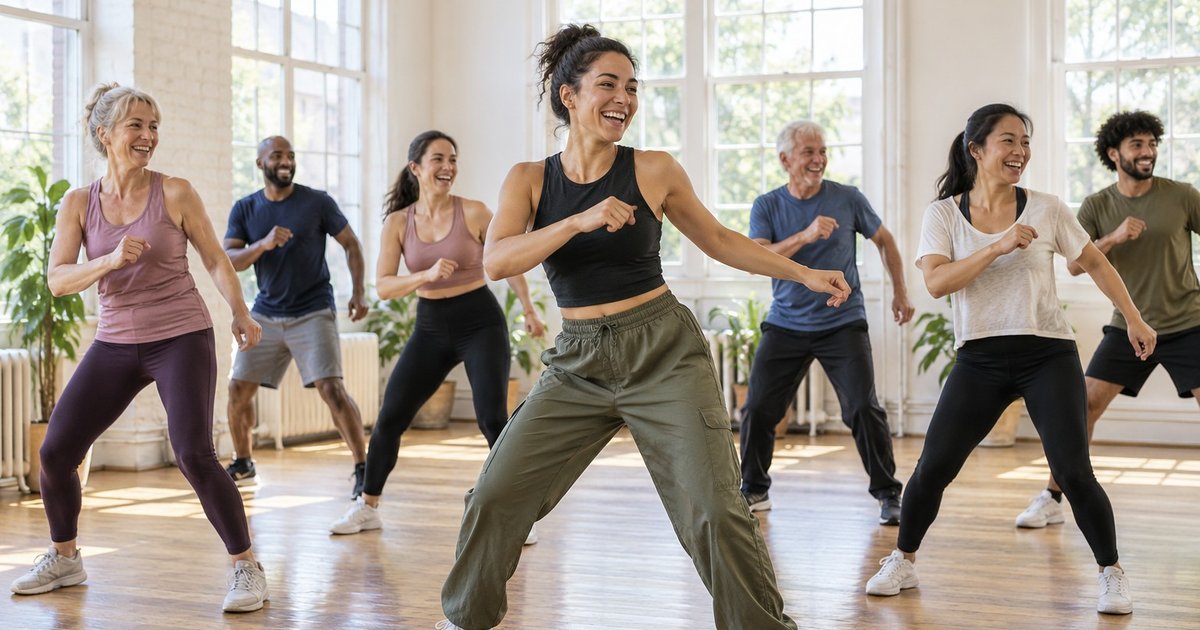
The best way to choose a dance class as an adult is to pick a style whose music you enjoy, look for a class labelled “adult beginner”, check that the teacher has experience with grown-up learners, and try a trial or casual class before paying for a full term. Most areas have options from social ballroom and line dancing to salsa, tap and adult ballet, and plenty of people start in their 40s, 50s, 60s and beyond.
This guide includes a few product links near the end. As an Amazon Associate, michelle.net.au earns from qualifying purchases, at no extra cost to you.
This guide compares the main styles for adult beginners, explains social and performance studios, partners, shoes and floors, shows how to compare term fees and casual rates, and gives you a checklist of questions to ask before you enrol, wherever you live.
At a glance
- Choose by music and mood: the style you enjoy is the one you will keep going to.
- You usually do not need a partner: many partner classes rotate, and many styles are danced solo.
- Start at the first level: even if you danced years ago.
- Ask about the floor: a sprung or cushioned floor is kinder on joints than concrete or tiles.
- Health check: if you have a heart, joint or balance concern, or have not exercised in a while, talk to your doctor first.
Why adults take up dance
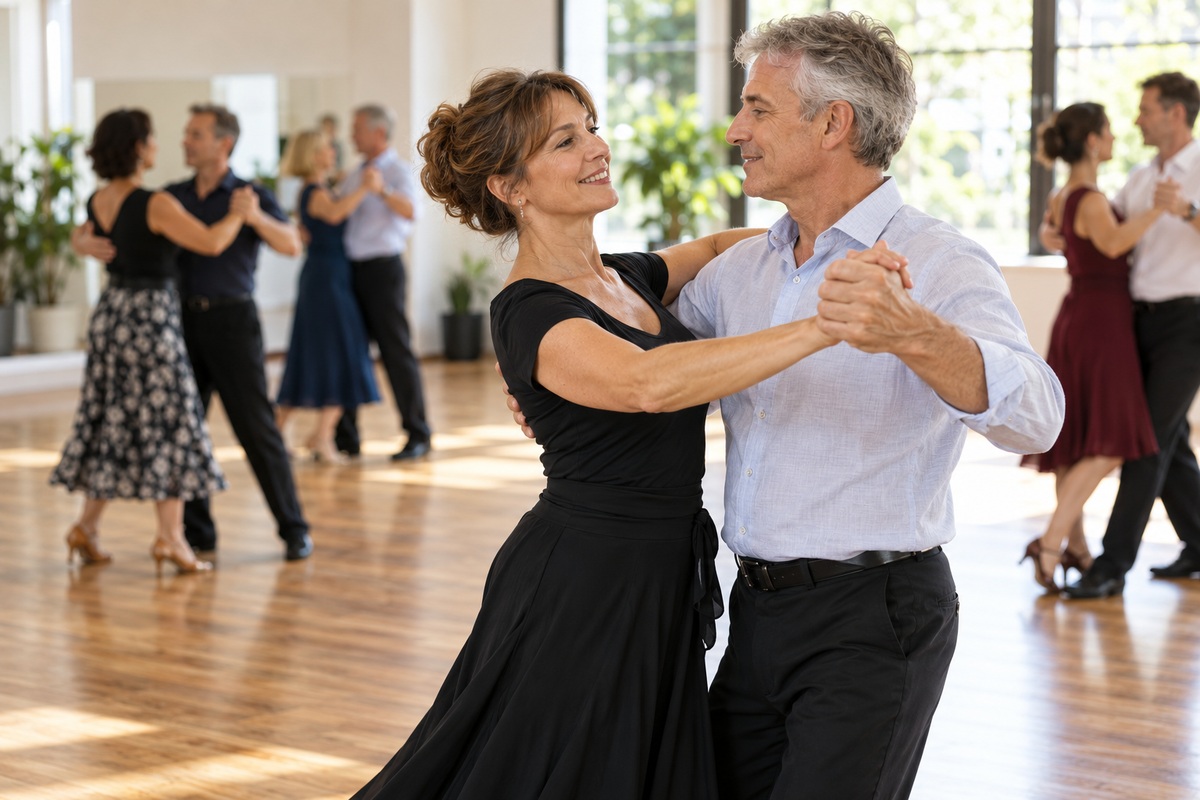
Adults come to dance for a sociable way to stay active, to prepare for a wedding, to meet people, to learn something creative, or to return to a hobby they loved. Learning steps to music keeps many people coming back in a way that solo exercise sometimes does not. The World Health Organization recommends that adults, including older adults, aim for 150 to 300 minutes of moderate activity a week, and older adults are encouraged to include activities that challenge balance and strength on three or more days. A weekly class can contribute to that, alongside the ideas in everyday movement, sitting and walking.
Some styles are more demanding than they look. If you have a heart condition, joint problem, osteoporosis, balance concerns, are pregnant, or have not been active for a while, check with your doctor before you start, and tell your teacher about anything relevant.
Dance styles for adult beginners compared
Names and formats vary between studios and countries, so read class descriptions and ask if unsure.
| Style | Partner needed? | Energy level | Impact on joints | Good if you like |
|---|---|---|---|---|
| Social ballroom (waltz, foxtrot) | Partner dance; many classes rotate | Gentle to moderate | Low | Structure, classic music, dancing at functions |
| Latin (cha-cha, rumba, samba, jive) | Partner dance; often rotates | Moderate to lively | Low to moderate | Rhythm and hip action |
| Salsa | Partner dance; usually rotates | Lively | Low to moderate | Social nights and Latin music |
| Swing (lindy hop, East Coast swing) | Partner dance; usually rotates | Bouncy, upbeat | Moderate | Big band and playful energy |
| Line dancing | No | Gentle to moderate | Low | Repetition, country or pop music, a social crowd |
| Tap | No | Moderate | Low to moderate | Rhythm without leaps or floor work |
| Adult ballet | No | Moderate, controlled | Low to moderate | Posture, control and classical music |
| Contemporary and jazz | No | Moderate to high | Moderate; may include floor work and turns | Expression and routines |
| Bollywood | No | Moderate to lively | Low to moderate | Bright music and expressive arms |
| Hip hop | No | Moderate to high | Moderate | Current music and grooves |
| Dance fitness and seated or gentle dance | No | Varies; seated options are very gentle | Low | Moving to music without pressure on technique |
A little more on each style
Ballroom and Latin are partner dances with set steps, which many beginners find reassuring. Salsa studios often hold regular social nights where students practise. Swing scenes in many cities are known for welcoming newcomers. Line dancing means everyone dances the same sequence in rows, no partner needed. Tap uses shoes with metal plates so you make the rhythm with your feet. Adult ballet starts at the barre before moving to the centre, with steps adapted for adult bodies; note that barre fitness classes borrow ballet positions but are a workout rather than a dance class. Contemporary and jazz usually build a short routine over several weeks. Bollywood mixes film choreography with classical and folk influences. Hip hop for adults should break moves down slowly; look for “adult beginner” rather than open classes. Some community centres also run seated or chair-based dance for people with limited mobility.
Social studios vs performance studios
- Social studios focus on dancing for fun and skills you can use at parties, weddings or social nights.
- Performance studios often work towards concerts, showcases, competitions or graded exams. That can be motivating, but may involve extra rehearsals, costume costs and time.
Neither is better, and some studios offer both. Ask which way a class leans before you enrol.
Do you need a partner?
For solo styles, no. For partner dances it depends on the studio: many group classes rotate partners every few minutes, so you dance with everyone; others ask you to register as a couple or try to balance leaders and followers. Ask whether you can enrol on your own, whether you can learn to lead or follow regardless of gender, and what happens when numbers are uneven. A good teacher will always make clear that you can decline a partner or ask for a lighter hold.
What a first class is like
Arrive a little early to fill in paperwork and settle in. The teacher usually starts with a warm-up, then breaks a few steps down slowly, often without music, before adding music and linking steps together. Adult classes commonly run 45 to 60 minutes. You will not get everything right in the first lesson, and nobody expects you to.
What to wear and bring
- Comfortable clothing that does not restrict knees or shoulders, in layers you can remove.
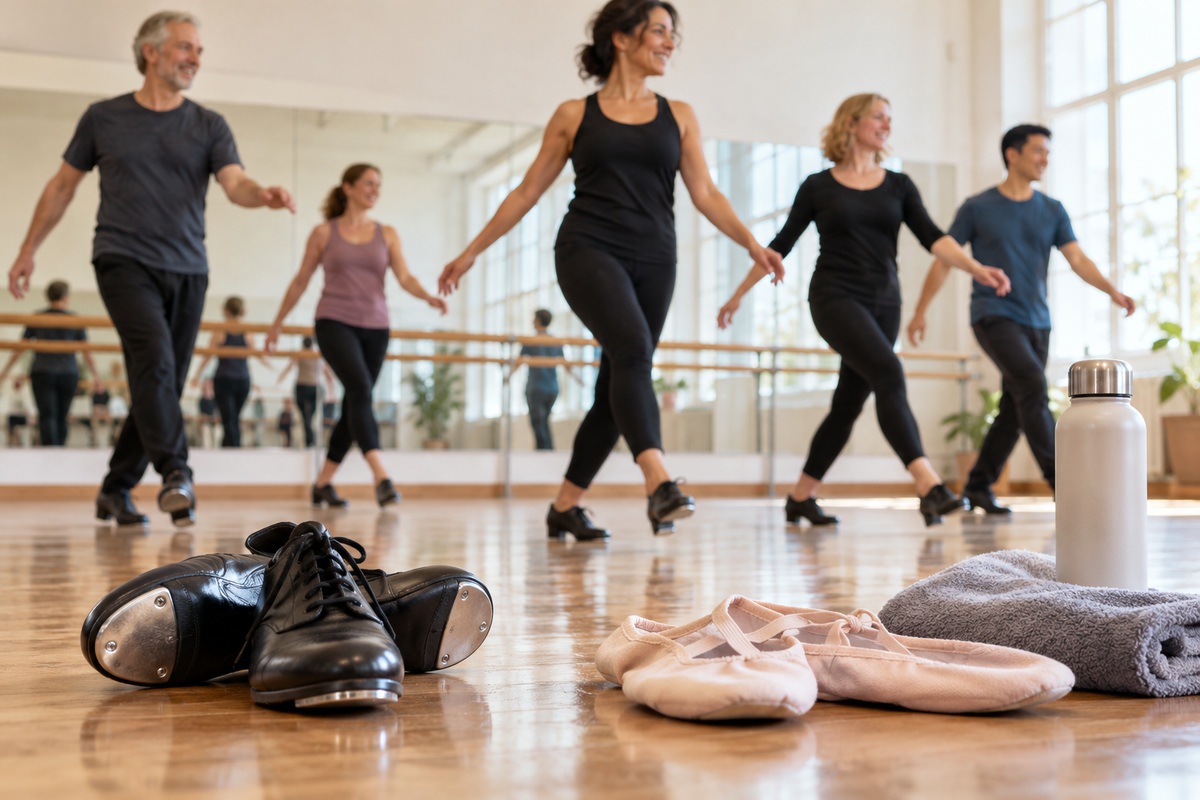
- Suitable shoes: for ballroom, Latin, salsa and swing, smooth-soled shoes that let you turn are usually best. Very grippy sneakers can catch on the floor and twist a knee or ankle. Ballet, contemporary and jazz may start in socks or soft shoes; ask about loan tap shoes.
- A water bottle and small towel. Fluids matter after a lively class; see how to rehydrate after exercise.
Do not rush to buy specialist dance shoes before your first class. Ask the teacher once you know you are sticking with it.
Floors and facilities
Many purpose-built studios use a sprung or cushioned floor with some give underfoot, which many dancers find more comfortable than concrete or tiles. Ask about the floor, especially if you have knee or ankle concerns. Also check there is enough space for the class size, whether there are mirrors, ventilation and temperature, change rooms and toilets, somewhere for your bag, and step-free access.
Choosing a teacher
A good teacher explains steps clearly, breaks them into small pieces, is patient when people get them wrong, and offers simpler options if a move does not suit your body. Many dance teachers hold qualifications through a dance teaching association or have long performing experience. Teaching adults is a different skill from teaching children, so ask whether they regularly teach adult beginners. Ask whether they hold current first aid and whether the studio is insured.
Levels, terms and casual drop-in
Classes are usually grouped as beginner, improver, intermediate and advanced. If you are new, start at the very first level.
| Payment option | How it works | Suits | Check |
|---|---|---|---|
| Trial class | Free or discounted first class | Testing a style and teacher | Whether it is a real class or a demo |
| Casual drop-in | Pay per class | Busy schedules, trying several styles | Whether drop-ins are allowed mid-term |
| Class pass or pack | Prepay a set number of classes | Regular but flexible attendance | Expiry dates |
| Term enrolment | Pay for a block of weeks with the same group | Learning progressively | Refunds or make-up classes if you miss weeks or need to stop |
Prices vary by studio, style, area and country, so ask directly. To compare fairly, divide the term fee by the number of classes you realistically expect to attend, not the number in the term.
Returning to dance after years away
Steps may come back faster than your body does. Flexibility, stamina, strength and balance often need rebuilding gradually.
- Start one level below where you think you belong, then move up.
- Warm up properly and avoid forcing positions that feel strained.
- Tell your teacher about past injuries.
- Use everyday balance practice between classes; the guide to balance habits for healthy ageing has simple ideas.
Confidence and first-class nerves
Feeling nervous is very common. Bring a friend for the first few weeks, tell the teacher it is your first class, remember that everyone else is watching their own feet, and commit to at least three classes before deciding. If nerves show up in many parts of life, understanding everyday anxiety may be a useful read.
Checklist: questions to ask before you enrol
- Is this class designed for complete adult beginners?
- Is there a trial class, and what does it cost?
- What are the term fees, casual rates and class pass options?
- Do I need a partner, and do classes rotate partners?
- Is the studio social or performance focused? Are concerts, exams or costumes involved?
- What is the teacher’s background, and do they regularly teach adults?
- Does the teacher hold current first aid, and is the studio insured?
- What type of floor does the studio have?
- What should I wear, and do I need special shoes?
- How many people are usually in a class?
- What happens if I miss a class or need to stop partway through a term?
- Are there social nights or practice sessions?
How to find classes near you
Search your suburb, town or neighbourhood with the style and level, for example “adult beginner salsa” or “social ballroom classes”. Look beyond studios: community centres, councils, libraries, seniors’ and community groups, social clubs and gyms often run dance classes. If dance is not quite for you, other sociable options include pickleball and tennis for adults, and the steps in choosing a Pilates or yoga studio apply to any class.
Common mistakes
- Paying for a full term before trying a class.
- Joining an “open” or improver class too soon. Beginner level builds confidence and technique.
- Wearing grippy sneakers for turning dances. They can catch on the floor.
- Not mentioning old injuries. Teachers can adapt steps only if they know.
- Judging yourself after one lesson. Give it a few weeks, ideally a full term.
- Pushing through pain or dizziness. Stop, sit down and tell the teacher; seek medical advice if it does not settle.
Sources this guide draws on: World Health Organization, guidelines on physical activity and sedentary behaviour; Healthdirect Australia, general physical activity guidance; national dance teaching associations’ published information on teacher qualifications.
Handy kit for this guide
These are practical everyday products, not supplements or medicines. As an Amazon Associate, michelle.net.au earns from qualifying purchases, at no extra cost to you. Prices and availability are set by Amazon and may vary by country.
- Gaiam Premium 5 mm Yoga Mat
Non-slip mat for yoga, Pilates, tai chi warm-ups and floor exercises.
View on Amazon - Fabric Resistance Bands (5-Band Set)
Loop bands in graded resistance for home strength exercises.
View on Amazon - Bambaw Insulated Stainless Steel Water Bottle (32 oz)
Plastic-free and keeps water cold all day, at home, on walks or at the gym.
View on Amazon
Frequently asked questions
Am I too old to start dancing?
No. Many studios welcome adults of all ages, and plenty of people start in later life. Choose a beginner or gentle class and check with your doctor first if you have health concerns.
Which dance style is easiest for beginners?
Line dancing, social ballroom and dance fitness are often seen as gentle starting points because steps repeat. The best style is usually the one with music you love, because that keeps you coming back.
Can I go to a partner dance class on my own?
Often, yes. Many salsa, swing and ballroom classes rotate partners, so people on their own are very welcome. Ask how the studio handles uneven numbers.
How many classes until I feel comfortable?
Everyone is different, but many adults find the first few weeks the hardest. Give yourself at least a full term before judging how you are going.
Do I need special dance shoes straight away?
Usually not. Wear comfortable shoes with a smooth sole for partner dances, or follow the teacher’s advice. Buy proper shoes once you know you will continue.
What if I have a joint problem or an old injury?
Speak to your doctor or physiotherapist before starting, and tell your teacher before class. A good teacher will suggest modifications and help you choose a style that suits you.
Find a style you enjoy, a teacher who makes adults feel welcome and a studio that fits your goals and budget, then give it a few weeks: the first step really is the hardest one.
This article is general information only and is not a substitute for advice from your doctor or another qualified health professional.